
Persian and Oriental Rug Style Guide: Traditional Patterns for UK Rooms
Persian and Oriental rugs feature repeating geometric motifs, central medallions, floral sprays and intricate border designs. These patterns work in British homes by anchoring traditional furniture or adding warmth to contemporary spaces when chosen in muted colours. In most UK rooms a 160x230 cm (approx 5x7.5 ft) or 200x290 cm (approx 6.5x9.5 ft) size leaves 30-60 cm of floor visible around the edges while allowing front legs of sofas or 60 cm clearance around dining tables to sit comfortably on the rug.
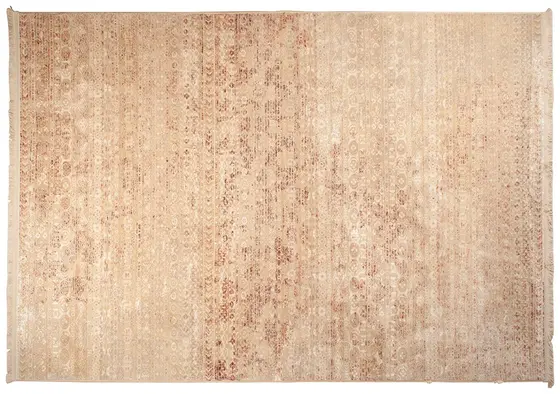
Common motifs in Persian and Oriental rugs
Traditional Persian designs centre on a large medallion surrounded by corner pendants and dense floral scrolls. Herati patterns show repeating fish or leaf shapes, while Boteh (paisley) motifs appear as teardrop forms. Oriental rugs often include geometric repeating borders and vine scrolls.
In UK homes these motifs add pattern without overwhelming a room when the background colour is neutral. A rug with a red or deep blue field suits classic interiors; softer beige or ivory versions fit modern schemes. Wool rugs hold these details well because the natural fibre accepts dye evenly and is resilient.
Medallion designs
The central medallion is the most recognised Persian element. It can be diamond-shaped, oval or lobed. In a living room a medallion rug placed with front sofa legs on the pile creates a balanced focal point. Choose a size that extends 15-30 cm beyond each end of the sofa.
Colour palettes for british homes
Traditional palettes use rich reds, indigos, ochres and creams. Contemporary UK rooms often pair these rugs with grey sofas or oak floors. A cream or beige Persian-style rug reflects light in north-facing rooms while hiding everyday marks better than pure white.
Green and rust accents appear in many Oriental patterns and coordinate with current paint shades such as sage or terracotta. Avoid bright primary colours unless the rest of the scheme is equally bold.
Styling in living rooms
For most British living rooms a 160x230 cm rug or 200x290 cm rug under a three-seater sofa with front legs on the rug works well. Leave 30-60 cm of floor showing at the sides. Traditional patterns balance patterned curtains or antique furniture; they also add texture against plain sofas.
Wool and wool-viscose blends give softness underfoot. A hand-tufted wool rug with a low pile of 8-12 mm is easier to vacuum than thicker shaggy styles. For smaller rooms reduce to 120x170 cm and leave only 20 cm of exposed floor.
Using Persian styles in dining rooms
Under a dining table the rug must extend at least 60 cm beyond the table on all sides so chairs remain on the pile when pulled out. A 200x300 cm size suits six-chair tables in standard UK dining rooms. Low-pile options are practical because they allow chairs to move without catching.
Polypropylene versions offer stain resistance for households with children. Traditional motifs in muted tones prevent the pattern from competing with tableware.
Bedroom placement and scale
In bedrooms the rug should show 50-60 cm of floor on each side of the bed. A 160x230 cm rug placed at the foot leaves space for bedside tables, while larger 200x290 cm rugs can run under the bed and extend on three sides. Softer wool-viscose blends feel warmer on bare feet.
Oriental patterns in soft blues or greens create a calm atmosphere. Avoid very dark traditional reds if the room is small; they can make the space feel enclosed.
Material choices for traditional looks
Wool is the classic fibre for Persian and Oriental designs because it is resilient and soil-hiding. It sheds when new but settles. Viscose adds sheen that mimics silk but is water-sensitive and prone to crushing and watermarks. Polypropylene rugs are stain-resistant and water-tolerant but can crush and are not heat-resistant.
Hand-tufted rugs have a glued backing; machine-made versions offer consistent patterns at lower cost. Check the product page for pile height, construction and care instructions.
Pairing with contemporary and classic furniture
Traditional rugs sit comfortably with mid-century teak, modern grey upholstery or Victorian mahogany. In classic rooms repeat one motif colour in cushions or lampshades. In contemporary spaces let the rug provide the only pattern against plain walls and linen sofas.
A Persian-style rug in neutral tones bridges both looks. For a lighter feel choose an ivory or sand colourway rather than the traditional deep reds.
| Motif | Typical Colours | Best UK Room Use |
|---|---|---|
| Medallion | Red, cream, navy | Living room focal point |
| Herati | Blue, beige, rust | Dining or bedroom |
| Boteh | Green, ochre, ivory | Hall or small living room |
Practical care for traditional rugs
Vacuum regularly with a low-power setting. Rotate the rug every six months to even out wear. Address spills immediately: blot, never rub. Wool tolerates professional cleaning; synthetics can often be spot-cleaned with mild detergent. Avoid placing heavy furniture on high-pile areas for long periods to prevent permanent crushing.
Traditional patterns hide minor marks better than plain rugs, making them practical for family homes.
Frequently asked questions
What is the difference between Persian and Oriental rugs?
Persian rugs are a subset of Oriental rugs made in Iran with specific motifs such as central medallions and floral scrolls. Oriental is the broader term covering traditional hand-knotted rugs from Turkey, India, China and surrounding regions. Both styles share repeating borders and geometric or floral elements but vary in density and colour balance.
Are Persian-style rugs suitable for modern UK homes?
Yes. Choose versions in muted beige, cream or grey rather than bright reds. A low-pile wool or polypropylene rug in a 160x230 cm size works under contemporary sofas and leaves the recommended 30-60 cm of floor visible. The traditional motifs add warmth without clashing with clean-lined furniture.
Which size rug do I need for a UK living room?
For a standard three-seater sofa use a 200x290 cm rug in a front-legs-on layout or 160x230 cm in smaller rooms. This follows the rule of 15-30 cm extension past each end of the sofa and 30-60 cm of exposed floor around the edges. Always measure your space first.
Do traditional Oriental rugs shed?
Wool versions shed when new. Vacuum regularly and the shedding reduces. Synthetic and viscose blends can show watermarks or crush marks more easily. Check the material on each product page.
How do I clean a Persian-style rug?
Vacuum on a low setting. Blot spills immediately with a clean cloth and mild detergent solution. Rotate the rug every six months. For deep cleaning use a professional rug cleaner. Check the product page for construction and care instructions.
Shop the guide
-
 Jasper Medallion Rug in Blue Cream
from £69.98
-
 Jasper Rug in Yellow, Grey, Cream & Black
from £69.98
-
 Luca Rug in Sage Green
from £89.98
-
 Lila Rug in Off-White & Grey
from £99.98
Related guides
- Traditional Rug Style Guide: Classic British and Heritage Looks
- Mid-Century Modern Rug Guide: Styling Retro Rooms with Rugs
- Maximalist Rug Style Guide: Layering Bold Patterns and Colour
- Geometric Rug Style Guide: Patterns and Styling Ideas for UK Homes
- Rug styles glossary: Persian to Scandi
- All rug guides
Questions about a specific rug? Every product page lists the maker's size, material, pile height and care details. Delivery is free and tracked to England, Wales and mainland Scotland, and you have 14 days to change your mind. See delivery and returns.