
Geometric Rug Style Guide: Patterns and Styling Ideas for UK Homes
Geometric rugs use lines, shapes and repeating forms to add structure without overpowering a room. In UK homes the most successful patterns are simple grids, chevrons and subtle arches that work with both modern and traditional furniture. Choose low-pile wool or polypropylene versions for high-traffic areas and balance bold designs by keeping walls and upholstery plain or textured rather than patterned.
Choosing the right geometric patterns
In most UK living rooms a rug with clean lines or a simple repeat works best. Grids and diamonds create order while chevrons and arrows add movement. Avoid very small or intricate repeats in large open-plan spaces; they can look busy from a distance. In smaller rooms opt for larger-scale patterns so the design remains visible around furniture.
Wool rugs hide everyday marks better than many synthetics and recover from foot traffic. Polypropylene versions tolerate spills and are easier to keep clean, though they can flatten over time in heavy-use areas. Viscose adds shine but shows watermarks easily so reserve it for low-traffic bedrooms.
Link a geometric rug to the rest of the scheme by picking up one colour from the pattern in cushions or a throw. Neutral bases (beige, grey, cream) allow bolder accent colours elsewhere. For a calm look pair a taupe geometric with plain linen sofas; for energy add a chartreuse or teal design against charcoal walls.
Styling geometric rugs in living rooms
Leave 30-60 cm of floor visible around the edges of the rug. A 160x230 cm or 200x290 cm size usually suits a standard three-seater sofa. The front-legs-on layout keeps the rug under the main seating area while the back legs rest on the floorboards or carpet. This proportion feels balanced in most British sitting rooms.
Pair a geometric design with:
- Plain or lightly textured sofas in linen, velvet or leather
- Wooden coffee tables with straight legs that echo the rug’s lines
- Simple floor lamps and neutral curtains to avoid pattern clash
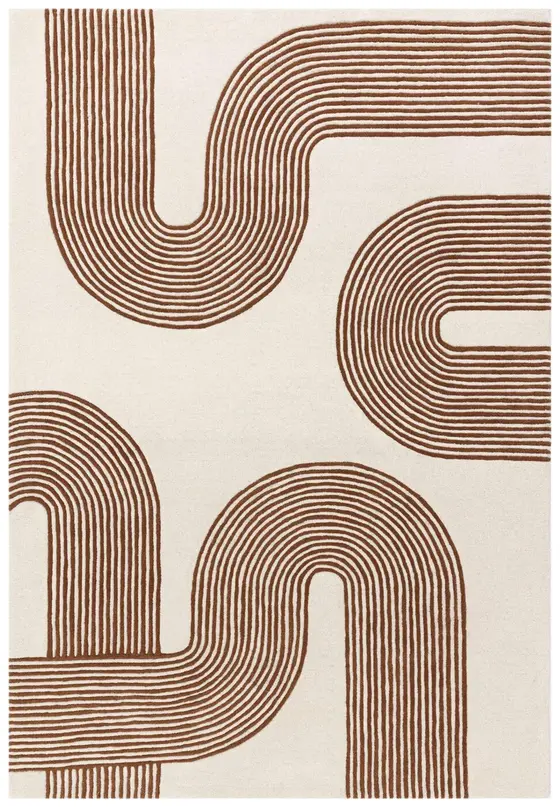
A wool geometric rug in graphite or stone grey anchors a room quickly. The Matrix 85 Arches Rug in Amber introduces soft curves that soften boxy sofas, while the Barnaby Wool Rug in Graphite offers a tighter linear pattern for more formal layouts.
Traffic and wear considerations
High-traffic living rooms benefit from low-pile or flatweave constructions. Hand-tufted wool rugs with a glued backing stay in place better than loose weaves. Rotate the rug every six months to even out wear from sofas and foot traffic.
Geometric rugs for bedrooms
Place the rug so it extends 50-60 cm beyond each side of the bed. A 200x290 cm or 200x300 cm size works for most double beds; in smaller bedrooms reduce to 160x230 cm. Soft underfoot pile improves comfort on cold mornings.
Choose lower-contrast patterns in bedrooms to promote calm. The Matrix Infinity Wool & Viscose Rug in Sage combines wool resilience with a subtle geometric repeat in muted green. Cream and beige bases reflect light and make small rooms feel larger.
Avoid high-shine viscose in bedrooms if you have pets or children; watermarks from spills or damp feet become obvious. Low-pile wool or recycled polyester options are more practical.
Geometric rugs in dining rooms
The rug must extend at least 60 cm beyond the table on all sides so chairs remain fully on the rug when pulled out. For a six-seater table this usually means a 200x290 cm or larger size. Low-pile or flat construction prevents tripping and makes cleaning easier after meals.
Polypropylene geometric rugs tolerate dropped food and drink. The Matrix 87 Arches Rug in Black offers strong contrast that defines the dining zone without showing every crumb. In open-plan kitchens a neutral geometric design helps separate the eating area from the cooking space.
Hallways and Runners
Runners 60-80 cm wide suit most UK hallways. Geometric patterns disguise footprints and vacuum marks. Wool runners feel warmer underfoot and resist crushing better than synthetics. The Hive Wool Runner in Teal adds colour and pattern to long narrow spaces while remaining practical.
Leave 30-60 cm of floor showing around the runner (20 cm in a small hallway). In stairwells choose low-pile designs for safety.
Balancing geometric rugs with other décor
Use this checklist when combining patterns:
- Limit total patterns in the room to two or three; let the rug be the strongest
- Repeat one colour from the rug in at least two other items (lampshade, cushion, artwork)
- Keep wall colour one or two tones lighter or darker than the rug’s dominant shade
- Pair angular rugs with curved furniture (round tables, arched mirrors) for contrast
- In traditional homes, choose geometric rugs with softer motifs such as arches rather than hard grids
A beige or cream geometric rug works with almost any palette. For a modern look layer a small plain textured rug on top of a larger geometric in the seating area. Vintage-style geometric designs bridge modern rugs with older furniture; see our vintage rugs collection for muted colourways.
Outdoor geometric rugs in recycled polyester withstand UK weather on covered patios. The Grayson Outdoor Rug in Taupe offers a subtle pattern that coordinates with indoor schemes.
Geometric rugs pair well with mid-century, Scandi and contemporary interiors common in UK homes. Their structured repeats bring order to busy family spaces while remaining timeless enough to survive redecoration cycles.
Frequently asked questions
Can geometric rugs work in traditional UK homes?
Yes. Choose designs with softer motifs such as arches or muted colours rather than high-contrast grids. Wool versions in beige or taupe sit comfortably alongside antique furniture and Persian-style pieces. The key is scale: larger repeats look more relaxed than tiny busy patterns.
How do I stop a geometric rug looking too busy?
Pick one or two colours from the rug and repeat them elsewhere in the room. Keep walls and large upholstery plain or lightly textured. In small rooms use a larger-scale pattern so the design is read as blocks of colour rather than fine detail. Low-contrast colourways (cream on beige, grey on charcoal) feel calmer.
Which materials are best for families with children?
Polypropylene and recycled polyester rugs are stain-resistant and water-tolerant, making spills easier to clean. Low-pile constructions hide crumbs and are less likely to trap toys. Wool offers natural resilience and soil-hiding but may shed initially. Avoid viscose as it marks with water.
Should the rug match the sofa or contrast with it?
Either works. Matching the dominant rug colour to the sofa creates a seamless look. Contrasting brings definition; for example a charcoal geometric rug grounds a light linen sofa. The safest route is a neutral geometric base with accent colours picked up in cushions.
How often should I rotate a geometric rug?
Rotate the rug to even out wear from sofas and foot traffic.
Shop the guide
-
 Deline Shaggy Rug in Dark Brown
from £69.98
-
 Deline Shaggy Rug in Green
from £69.98
-
 Izaline Checkered Shaggy Rug in Dark Brown
from £69.98
-
 Fossay Checkered Shaggy Rug in Dark Brown
from £69.98
Related guides
- Art Deco Rug Style Guide: Glamorous Geometric Patterns for UK Homes
- Cottagecore Rug Style Guide: Romantic and Rustic Styling Ideas
- Persian and Oriental Rug Style Guide: Traditional Patterns for UK Rooms
- Moroccan Beni Ourain Rug Guide: Style and Placement in UK Homes
- Rugs for homes with pets
- All rug guides
Questions about a specific rug? Every product page lists the maker's size, material, pile height and care details. Delivery is free and tracked to England, Wales and mainland Scotland, and you have 14 days to change your mind. See delivery and returns.