
Rug styles glossary: Persian to Scandi
Persian or Oriental? Berber or Moroccan? Kilim or dhurrie? This glossary explains the rug styles and terms you will meet when shopping, with what each looks like and where it works.
Traditional styles
- Persian
- Hand-knotted rugs from Iran, named after their weaving towns or regions (Tabriz, Kashan, Isfahan, Heriz). Known for central medallions, floral fields and deep borders. "Persian-style" rugs copy the look by other methods. Persian-style rugs.
- Oriental
- A broad term for rugs from Asia: Iran, Turkey, the Caucasus, India, Pakistan, China and Afghanistan.
- Turkish (Anatolian)
- Rugs from Turkey, often with bold geometric motifs. Turkey is also a major producer of modern machine-woven rugs.
- Kilim
- A flatweave (no pile) from Turkey, the Balkans, the Caucasus and Central Asia, usually with geometric diamonds and stepped patterns.
- Dhurrie
- A flatwoven cotton or wool rug from India, often in simple stripes or geometrics.
- Aubusson
- French flatwoven tapestry rugs with pastel florals and scrolling medallions.
- Vintage or distressed
- Traditional designs printed or woven to look faded and worn, as if decades old. Traditional and vintage rugs.
Moroccan, Berber and boho
- Berber
- Rugs from the Amazigh (Berber) peoples of North Africa. Beni Ourain rugs are the best known: cream wool with dark diamond lattices and a deep, shaggy pile. Berber-style rugs.
- Moroccan
- Usually used for Berber-tradition rugs, including colourful Boucherouite rag rugs and Azilal rugs with abstract motifs.
- Boho
- A relaxed, eclectic look mixing tribal geometrics, fringes, natural fibres and warm earth colours.
- Note on carpets called "Berber"
- In UK carpet shops, "Berber" also describes a looped carpet pile with flecks of colour. It is a different thing from a Berber rug.
Modern styles
- Scandi (Scandinavian)
- Pale neutrals, simple geometric or plain designs, natural texture and a light, uncluttered look. Look at plain and textured rugs and cream rugs.
- Japandi
- A blend of Japanese and Scandinavian minimalism: muted earth tones, low contrast, handcrafted texture.
- Abstract
- Painterly, irregular designs with no strict repeat. Abstract rugs.
- Geometric
- Regular shapes such as hexagons, diamonds, chevrons and grids. Geometric rugs.
- Mid-century
- 1950s and 60s-inspired shapes and colours: ochre, teal, olive and walnut tones.
- Animal print
- Zebra, tiger and leopard-inspired patterns. Animal print rugs.
Construction and pile terms
- Hand knotted
- Each knot tied by hand on a loom. The slowest and most valuable method.
- Hand tufted
- Yarn punched through a backing with a hand-held tool, then sheared. Dense, plush pile.
- Hand woven / handloom
- Woven on a hand-operated loom, often flatter and more structured.
- Machine woven / power-loomed
- Made on mechanical looms: consistent, affordable and detailed.
- Flatweave
- No pile; the weave is the surface. Flatweave rugs.
- Shaggy
- A long, deep pile. Shaggy rugs.
- High-low / carved
- Two pile heights, or pile clipped into grooves, making pattern from texture. High-low rugs.
- Cut pile / loop pile
- Cut pile has the yarn tips sheared open (soft, velvety); loop pile leaves them as loops (textured, hard-wearing).
Construction methods are compared in depth in hand tufted vs hand woven vs machine made.
Frequently asked questions
What is the difference between Persian and Oriental rugs?
Persian rugs are made in Iran. Oriental is a wider term for rugs from across Asia, including Persian rugs.
What is a Moroccan rug?
Usually a Berber-tradition rug from Morocco, such as a cream Beni Ourain with dark diamonds, or a colourful Azilal or Boucherouite.
What is a Scandi rug?
A rug in the Scandinavian style: pale, natural and simple, often plain, textured or lightly geometric.
What is a kilim?
A flatwoven rug with no pile, traditionally from Turkey, the Caucasus and Central Asia, with geometric patterns.
Shop the guide
-
 Luca Rug in Sage Green
from £89.98
-
 Lila Rug in Tan & Brown
from £89.98
-
 Fes FE03 Rug in Beige
from £174.98
-
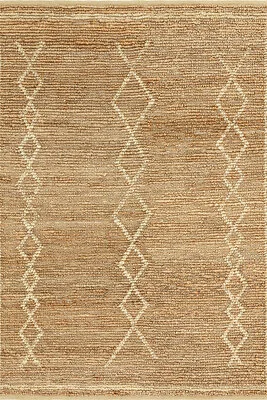 Souk Jute Rug in Natural
from £169.98
-
 Myrtle Avenue V Rug in Green
from £139.98
-
Luca Rug in Sage Green
from £89.98
-
 Luca Rug in Brown
from £99.98
-
 Luca Rug in Denim & Blue
from £99.98
Shop all traditional & vintage
Related guides
- How rugs are made: construction types explained
- How to choose a rug colour
- How to layer rugs
- All rug guides
Questions about a specific rug? Every product page lists the maker's size, material, pile height and care details. Delivery is free to England, Wales and mainland Scotland: 2-5 working days for Asiatic rugs and 1-2 working days for Livabliss rugs. See delivery and returns.