
Maximalist Rug Style Guide: Layering Bold Patterns and Colour
Maximalist rug style embraces clashing colours and overlapping patterns when the combinations are deliberate. Layer two or three rugs so the bottom one frames the top, repeat one colour across designs, and keep at least one neutral or textured rug in the stack. This creates depth and personality while the repeating elements hold the room together.
Why maximalist rug layering succeeds in UK homes
Maximalist style succeeds when every layer has purpose. A large base rug grounds the furniture while a smaller patterned piece on top adds interest under a coffee table or in a reading corner. Repeating a single hue, such as rust or indigo, across different scales of pattern prevents the scheme from feeling random. In most living rooms a 200x290 cm or 160x230 cm base rug leaves 30-60 cm of floor visible around the edges.
Wool and wool-viscose rugs bring natural resilience that suits busy households. Polypropylene options tolerate spills better and suit rooms with higher traffic or children. Choose pile heights carefully: a low-pile base rug prevents the top rug from shifting or creating lumps.
Modern rugs with abstract motifs pair well with traditional Persian-style designs. The contrast in pattern scale creates the controlled chaos that defines maximalism.
Choosing the base rug
The base rug should be the largest layer and usually the simplest in pattern or the most neutral in colour. It sets the boundaries for the furniture layout. In a typical UK living room a front-legs-on arrangement works best: the rug extends 15-30 cm past each end of the sofa. A 3-seater sofa usually pairs with a 200x290 cm rug; choose 160x230 cm in smaller rooms.
Consider these practical points when selecting a base:
- Low to medium pile prevents the top rug from shifting or creating lumps.
- Stain-resistant materials such as polypropylene or recycled polyester cope with accidental spills from the layers above.
- Neutral tones like beige, cream or grey allow bolder rugs on top to stand out without fighting for attention.
Good base options include plain textured rugs or subtle abstract designs. A plain rug provides grip and comfort underfoot while the patterned layer adds the maximalist personality.
Common base rug sizes
Use 160x230 cm or 200x290 cm for living rooms, 200x300 cm when the room is larger or the sofa is oversized. Runners 60-80 cm wide work well in hallways layered with narrower kilims.
Layering multiple patterned rugs
Successful layering relies on scale contrast and at least one shared colour. Place a large geometric or abstract rug underneath, then offset a smaller Persian-style or floral design on top. The top rug should cover roughly two-thirds of the base so the border remains visible on at least two sides.
Intentional clashes work when you follow these rules:
- Repeat one dominant colour (for example rust from a Matrix 105 Signature Rug in Rust) in both patterns.
- Vary pattern scale: pair a large motif with a small intricate one.
- Offset the top rug by 30-50 cm so it creates an asymmetrical frame.
- Anchor the layers with furniture: front sofa legs on the base rug, coffee table fully on the top rug.
In bedrooms a smaller patterned rug layered beside the bed adds interest without covering the entire floor. Leave 50-60 cm of base rug showing on each side of the bed for easy access.
Abstract rugs with painterly strokes sit comfortably beside more structured Persian motifs. The visual tension between the two styles is part of the appeal.
Colour clashing that looks intentional
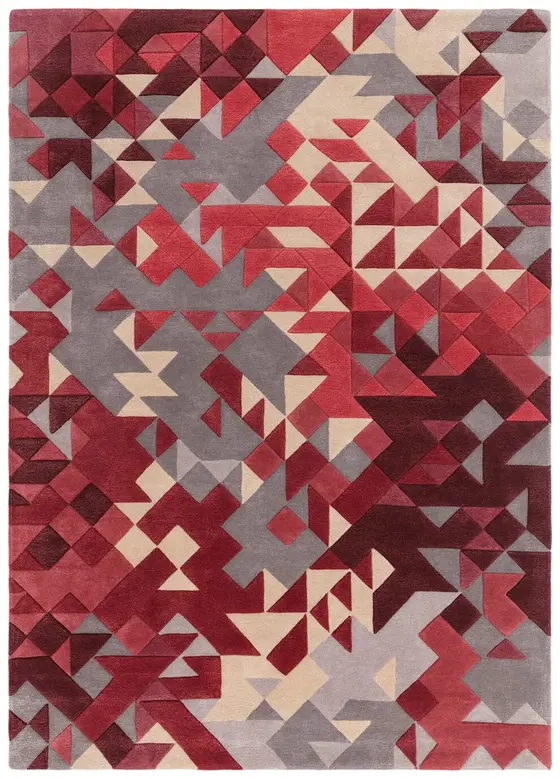
Clashing colours succeed when they share an underlying temperature or intensity. Pair warm rust and ochre with deep teal or navy rather than bright primary red. A multicoloured rug such as the Enigma in red multi can pull together seemingly unrelated shades because it already contains them.
Practical checklist for colour combinations:
- Choose one hero colour that appears in every rug in the stack.
- Use neutrals (beige, grey, off-white) as bridges between bolder tones.
- Test in daylight: colours that look good under shop lighting can shift at home.
- Limit to three main colours in a small room to avoid visual overload.
Wool-viscose rugs deliver rich, lustrous colour but mark easily with water. Polyester and polypropylene versions offer similar vibrancy with greater water tolerance and easier cleaning. The Enigma Wool & Viscose Rug in Red Multi demonstrates how a single multicolour design can anchor an entire maximalist scheme.
Layering in different rooms
Living rooms benefit from generous layers under seating areas. A 200x290 cm base rug with a 120x170 cm patterned top rug under the coffee table creates a defined zone. Dining rooms need the rug to extend 60 cm beyond the table on all sides so chairs remain on the rug when pulled out; layering here works best with flatweave or low-pile options to keep chairs stable.
In bedrooms the layered look is usually kept to one side of the bed or used as a bedside runner. A bold 160x230 cm rug placed under the bed with 50-60 cm showing on each side gives softness underfoot when getting up. Hallways suit narrow runners layered with vintage-style kilims that add pattern without narrowing the walkway.
Living room rugs in wool offer the resilience needed for layered arrangements that see daily use. Outdoor-rated polypropylene rugs can even extend the maximalist look onto patios when the doors are open.
Material and care considerations for layered rugs
Layering increases wear on the base rug, so choose hard-wearing construction. Hand-tufted wool and viscose rugs deliver luxurious feel but the viscose component is prone to watermarks and crushing. Machine-woven polypropylene or polyester rugs tolerate the extra pressure from a top layer and clean more easily.
New wool rugs shed for the first few weeks; this is normal and decreases with regular vacuuming. Flatweave or low-pile bases prevent the top rug from sinking and creating uneven surfaces. Always rotate both rugs every six months to even out wear.
For rooms with pets or children, a polypropylene base with a wool-viscose top rug balances durability and comfort. The Grayson Outdoor Rug in Grey proves useful as a tough base layer that can handle occasional outdoor use as well.
Finishing the maximalist scheme
Complete the look with accessories that echo the rug colours without matching exactly. Cushions in tones pulled from the top rug reinforce the palette. Lighting positioned to cast soft shadows across the layered edges emphasises the depth created by the different pile heights and patterns.
Keep the surrounding floor visible. In most rooms 30-60 cm of bare floor around the outer rug prevents the scheme from feeling cramped. In smaller rooms reduce this to 20 cm. The result is a confident, collected interior that feels personal rather than cluttered.
Explore Persian-style rugs for traditional motifs that contrast beautifully with modern abstracts, or browse wool rugs for pieces that offer both beauty and practical resilience in layered arrangements.
Frequently asked questions
How many rugs should I layer in a maximalist scheme?
Two rugs work for most rooms. A third layer can be added in very large spaces but risks looking messy. The key is ensuring each subsequent rug is noticeably smaller and shares at least one colour or motif with the layers below.
Can I layer rugs with different pile heights?
Yes, but keep the base rug low pile. A medium or high pile top rug sits comfortably on a low base without creating trip hazards or uneven surfaces. Avoid two high-pile rugs together as they can shift and feel unstable underfoot.
What size should the top rug be compared with the base?
The top rug should cover roughly two-thirds of the base rug, leaving a visible border of 30-60 cm on at least two sides. This creates the framed effect that defines intentional layering rather than random overlapping.
Do layered rugs move around on hard floors?
They can. A non-slip underlay or rug gripper between the base rug and the floor, plus another between the two rugs, prevents movement.
Is maximalist rug style suitable for small rooms?
Yes, when the layers are scaled down. Use a 120x170 cm or 160x230 cm base rug and a smaller top piece. Keep colours slightly more tonal than in large rooms and leave at least 20 cm of floor visible around the edges to avoid a cramped feel.
Shop the guide
-
 Myrtle Avenue V Rug in Green
from £139.98
-
 Myrtle Avenue IV Rug in Brown & Cream
from £79.98
-
 Myrtle Avenue III Rug in Brown & Cream
from £79.98
-
 San Francisco Rug in Sage Green & Neutral
from £69.98
Related guides
- Persian and Oriental Rug Style Guide: Traditional Patterns for UK Rooms
- Geometric Rug Style Guide: Patterns and Styling Ideas for UK Homes
- Art Deco Rug Style Guide: Glamorous Geometric Patterns for UK Homes
- How to style blue rugs with sofas, walls and flooring
- How to layer rugs
- All rug guides
Questions about a specific rug? Every product page lists the maker's size, material, pile height and care details. Delivery is free and tracked to England, Wales and mainland Scotland, and you have 14 days to change your mind. See delivery and returns.