
Carved rugs: pattern and texture guide
Carved rugs are created by cutting and sculpting the pile to produce high-low patterns that add depth, shadow and texture. The technique highlights motifs through varying heights, making designs appear three-dimensional and giving floors visual interest without relying solely on colour.
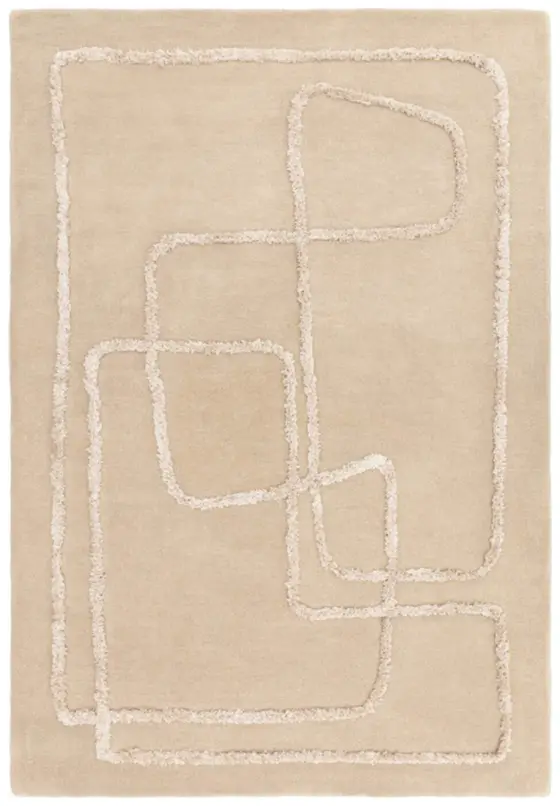
How carved rugs are made
Carved rugs, also called high-low pile rugs, start with a base pile that is either tufted or woven. Selected areas are then cut shorter or left longer using specialised shearing tools or programmed machinery. This creates contrast between raised and recessed sections that form patterns. Hand-carved versions allow greater precision in organic shapes while machine-carved rugs deliver consistent results at larger scales.
The process requires accurate depth control. A typical carved rug might have a 12 mm pile in raised areas and 4-6 mm in recessed zones. The contrast produces the sculpted effect. Many high-low & carved rugs combine this with different yarn types for added visual and tactile variety.
Hand vs machine carving
Hand carving is done after tufting. Artisans follow a pattern and shear by hand, allowing subtle transitions. Machine carving uses computer-controlled blades on power looms, suiting geometric or repeating designs. Both methods appear in modern ranges but hand-finished pieces often show softer edges.
Design impact in interiors
The high-low structure catches light differently across the surface, creating shadow lines that emphasise pattern. This makes carved rugs effective in rooms where you want subtle interest rather than flat colour. In living rooms a carved design can anchor seating without competing with wall art or soft furnishings.
Common layouts follow standard UK sizing rules. For most living rooms leave 30-60 cm of floor visible around the rug edges. Under a three-seater sofa a 160x230 cm or 200x290 cm rug works well with front legs on the rug. In smaller rooms reduce to 20 cm border. Dining tables need at least 60 cm extra on all sides so chairs remain fully on the rug when pulled out.
Bedroom placement usually shows 50-60 cm of rug on each side of the bed. Neutral carved rugs in cream, beige or grey pair easily with existing schemes while bolder multicoloured versions add focus.
Materials and durability
Material choice affects both look and performance. Wool is naturally resilient and soil-hiding but sheds when new. Viscose adds shine but is water-sensitive and prone to crushing and watermarks. Polypropylene is stain-resistant and water-tolerant but can crush and is not heat-resistant.
Blends are common. A wool and viscose mix gives softness and subtle sheen with carved definition. Polyester and polypropylene blends provide affordability and stain resistance. Jute is a plant fibre that dislikes water and can mark. For carved effects, consistent pile density matters more than fibre alone.
See our ranges of wool rugs and polypropylene rugs to compare options. Many carved designs also appear in modern & abstract collections.
Pattern types
Carved rugs fall into several styles:
- Geometric: repeating shapes with sharp high-low transitions
- Abstract: fluid lines where carving creates movement
- Floral or motif: raised petals or leaves against lower background
- Textured plain: subtle overall carving that looks almost solid from distance
Choose pattern density according to room use. Finer details suit bedrooms where feet are bare. Larger-scale carving works better in living rooms viewed from further away. Runners 60-80 cm wide can carry carved borders along hallways.
Care and maintenance
Regular vacuuming with a suction-only cleaner preserves the carved definition. Avoid beater bars that may damage the sculpted edges. Rotate the rug every six months to even out wear. Spills should be blotted immediately. Check individual product pages for exact care instructions as requirements vary by construction and fibre.
Wool versions are naturally more resilient to crushing than viscose. Polypropylene tolerates damp cleaning better but can show flattening in heavy traffic. Hand-tufted rugs have a glued backing so they should not be wet cleaned aggressively.
Choosing the right size
Use these practical rules for UK homes:
- Living room: rug should extend 15-30 cm beyond each end of the sofa
- Dining: add 60 cm on every side of the table for chair movement
- Bedroom: allow 50-60 cm visible rug on each side of the bed
- Small rooms: reduce border to 20 cm
Popular sizes include 120x170 cm, 160x230 cm, 200x290 cm and 200x300 cm. Measure your space before choosing. Product pages list exact dimensions, pile height, material and construction.
| Room | Recommended carved rug size | Typical layout |
|---|---|---|
| Living room (standard) | 160x230 cm or 200x290 cm | Front legs of sofa on rug |
| Living room (small) | 120x170 cm or 160x230 cm | All legs on rug if possible |
| Dining (4-6 chairs) | 200x290 cm | 60 cm beyond table edge |
| Bedroom (double bed) | 200x290 cm | 50-60 cm visible each side |
Our living room rugs, dining room rugs and bedroom rugs include many carved options in these sizes.
Frequently asked questions
What is the difference between carved and high-low pile rugs?
The terms are often used interchangeably. Both describe rugs where the pile is deliberately cut to different heights to create pattern and texture through shadow and relief. Carved usually implies more detailed hand or machine sculpting after the initial construction.
Are carved rugs suitable for homes with pets?
It depends on the material. Wool and polypropylene versions cope better with claws and dirt than viscose. Low-pile carved areas are easier to clean than deep shaggy sections. Always check the pile height and construction on the product page.
How do I stop a carved rug from moving on a hard floor?
Use a good quality non-slip underlay cut to the rug size. This also helps protect the carved definition by reducing movement and flattening. Most carved rugs are hand-tufted or machine-woven and benefit from this extra stability.
Can carved rugs be used outdoors?
Only if specifically labelled as outdoor rugs. Most carved designs are for indoor use because water and UV exposure damage the sculpted pile and backing. Synthetic outdoor versions exist but lack the fine carving of indoor wool or viscose rugs.
Do carved rugs shed?
Wool carved rugs shed most when new but this reduces after a few weeks of regular vacuuming. Synthetic fibres shed far less. The carving process itself does not increase shedding if the rug is well constructed.
Shop the guide
-
 Ariana Shard Shaggy Rug in Multicoloured
from £89.98
-
 Ariana Shaggy Rug in Vanilla
from £129.98
-
 Henley Wool & Viscose Rug in Petrol Grey
from £169.98
-
 Henley Wool & Viscose Rug in Putty
from £169.98
Shop all high-low & carved rugs
Related guides
- An autumn rug refresh: texture, colour and warmth
- Wool Blend Rugs: What the Mix Means
- Warp and weft: how rug weaving works
- Tencel rugs: sustainable fibre explained
- What size rug do I need? A room-by-room guide
- All rug guides
Questions about a specific rug? Every product page lists the maker's size, material, pile height and care details. Delivery is free and tracked to England, Wales and mainland Scotland, and you have 14 days to change your mind. See delivery and returns.