
Home office rug guide: comfort, noise reduction and style
A good home office rug adds cushioning under your chair, dampens the sound of wheels on hard floors and ties the room together without distracting from video calls. Choose low-to-medium pile in durable synthetics or wool for the best balance of comfort and chair movement. In most UK home offices a 160x230 cm or 200x290 cm rug leaves 30-60 cm of floor visible around the edges while extending past the desk and chair.
Size and placement
In a typical UK home office the rug should sit under the desk and chair while leaving 30-60 cm of bare floor showing on all sides. For a standard 120 cm wide desk, a 160x230 cm rug works in smaller rooms; a 200x290 cm or 200x300 cm version gives more space for a larger L-shaped layout or visitor seating. The front legs of the chair should stay on the rug at all times so the wheels roll smoothly instead of catching on edges.
Measure your desk and chair footprint first. Add at least 60 cm in front of the desk so the chair can pull out fully. In very compact rooms 20 cm of border may be enough, but avoid tight fits that make the space feel smaller.
Under-desk layouts
- Desk only: rug 30 cm larger than desk on all sides
- Desk plus visitor chair: 200x290 cm common choice
- Full room coverage: 200x300 cm or larger with 30-50 cm border
Link the rug to the rest of your home by choosing colours that appear in adjacent living areas. Living room rugs often share the same neutral palettes that work well in offices.
Material comparison for office use
Material choice affects comfort underfoot, noise levels and how easily the rug tolerates chair movement and occasional spills.
| Material | Comfort | Noise reduction | Chair movement | Care notes |
|---|---|---|---|---|
| Wool | Resilient underfoot | Good sound absorption | Smooth on low pile | Vacuum regularly; avoid excess water |
| Polypropylene | Medium | Moderate | Good on flat weaves | Stain-resistant, water-tolerant |
| Polyester / PET | Soft in thicker piles | Good in thicker piles | Can snag if too shaggy | Easy to clean but can crush over time |
Wool rugs offer natural spring. Polypropylene options cope better with wheeled chairs on hard floors. Recycled polyester blends give softness.
Pile height and noise reduction
Low pile (under 10 mm) or flatweave styles allow office chairs to glide quietly with minimal resistance. Medium pile (10-20 mm) adds cushioning but can still work if the backing is firm. Avoid very high shaggy rugs in offices; the wheels sink in and create drag or noise.
For hard floors such as laminate or wood, a rug with some thickness reduces the clatter of chair wheels. Wool versions absorb sound better than thin synthetics. If your office has carpet already, a low-pile rug on top can still define the workspace and protect the carpet from chair damage.
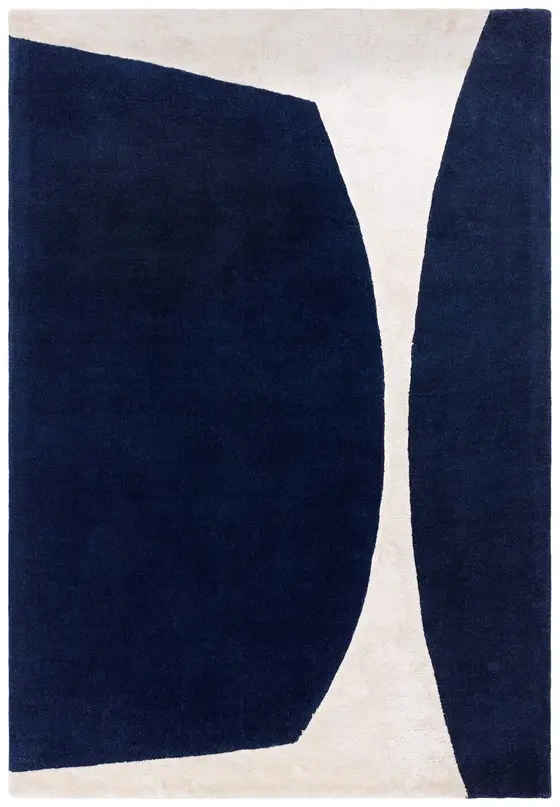
Look at low pile rugs or plain & textured rugs for the smoothest chair experience. The Matrix 102 Signature Rug in Indigo offers medium-thick pile that balances comfort and mobility.
Style choices that suit home offices
Neutral tones keep the space calm and professional on camera. Beige, grey, cream and soft blue shades are popular because they do not compete with screen backgrounds. Abstract or subtle geometric patterns add interest without being distracting.
Modern abstract designs work well in contemporary homes. Persian-style rugs can add warmth if your office has traditional furniture. Avoid bright multicoloured rugs if you frequently appear on video; they can pull focus.
Consider these practical style routes:
- Plain textured neutrals for maximum versatility
- Subtle geometric patterns that hide marks
- Soft blue or green tones that feel restful
Browse modern & abstract rugs or beige & natural rugs for office-appropriate options. The Hive Wool Rug in Charcoal gives a smart, low-key look with the benefits of wool.
Durability and maintenance
Home office rugs face daily chair traffic, so construction matters. Machine-woven polypropylene or polyester rugs stand up to wheels better than delicate hand-knotted pieces. Hand-tufted wool rugs with sturdy backings also perform well if the pile is not too long.
Vacuum at least twice weekly to remove grit that can damage both the rug and chair casters. Rotate the rug every few months so wear is even. For spills, blot immediately; polypropylene styles are easiest to clean.
Check the product page for exact pile height, construction and care instructions before buying. Most office rugs need only regular vacuuming and occasional spot cleaning.
Practical picks
For comfort underfoot and quiet chair movement, medium-pile polyester or wool rugs in 160x230 cm or 200x290 cm are the most useful sizes for UK home offices.
The Romy 11 Element Rug in Blue offers recycled polyester with a 10 mm pile that cushions without trapping wheels. For classic style the Rugged Persian-Style Rug in Ocean, Large provides a larger 200x300 cm format.
Shop the full selection in our Asiatic London rugs or large rugs categories to match your exact room dimensions and colour scheme.
Frequently asked questions
What rug size do I need for a standard home office desk and chair?
A 160x230 cm rug suits most small UK home offices with a single desk. For larger desks or additional seating choose 200x290 cm or 200x300 cm. The rug should extend at least 15-30 cm past each end of the desk and keep all chair wheels on the surface when in normal use.
Do thicker rugs reduce office chair noise on hard floors?
Low to medium pile rugs absorb the sound of wheels better than bare floors. Wool and denser polyester constructions give good noise reduction while still allowing smooth movement. Very high pile can increase resistance and noise.
Which materials are best for wheeled office chairs?
Low-pile polypropylene or tightly woven polyester offer the least resistance for chair casters and resist crushing. Wool rugs with short pile also perform well. Avoid long shaggy styles as wheels sink in and create drag or uneven wear.
Can I use a rug on carpet in a home office?
Yes. A low-pile rug placed over existing carpet defines the workspace, protects the carpet from chair damage and adds extra cushioning. Choose a firm construction so the chair does not create rucks or movement between the layers.
How do I stop a rug sliding under an office chair?
Select a rug with a textured or slightly grippy backing. On hard floors a non-slip underlay helps; on carpet the weight of furniture is usually enough. Low to medium pile styles also resist movement better than very thick shaggy rugs.
Shop the guide
-
 Amelie Lana Rug in Rust With Faded Blue Hues
from £29.98
-
 Atlas Shaggy Rug in Emerald Green
from £59.98
-
 Atlas Shaggy Rug in Gunmetal Grey
from £59.98
-
 Atlas Shaggy Rug in Ivory Cream
from £59.98
Related guides
- Rugs for tiled floors: warmth, comfort and noise reduction
- Best rugs for flats with neighbours below: noise reduction
- Teen bedroom rug ideas that match their style
- Loft Room Rug Guide: Insulation, Comfort and Low-Ceiling Tips
- How to clean a wool rug at home
- All rug guides
Questions about a specific rug? Every product page lists the maker's size, material, pile height and care details. Delivery is free and tracked to England, Wales and mainland Scotland, and you have 14 days to change your mind. See delivery and returns.