
Can a rug damage a wooden floor?
A rug will not normally damage a wooden floor when the correct type is chosen and basic precautions are taken. Most damage comes from trapped grit, moisture or unsuitable backing rather than the rug itself. Selecting low-pile wool or polypropylene rugs with a non-slip underlay and regular vacuuming keeps both floor and rug in good condition.
What actually causes damage to wooden floors
Wood floors are vulnerable to abrasion from grit and sand trapped under a rug, which acts like sandpaper when walked on. Moisture trapped beneath can cause warping or discolouration. Heavy furniture legs pressing through thick pile can also leave indentations. Hand-tufted rugs with glued backings sometimes leave residue if they become wet.
Wool rugs are naturally resilient and hide soil well. In contrast, polypropylene rugs tolerate occasional spills.
Safest rug materials for wood floors
Low-pile wool rugs cause the least abrasion because the fibres are springy. Polypropylene and polyester blends are water-tolerant and easy to keep clean, making them practical in kitchens or busy areas. Avoid viscose on wood because it is prone to watermarks and crushing that can transfer pressure unevenly.
Flatweaves and low-pile handwoven options allow air circulation and are less likely to trap moisture. Shaggy rugs need more care because the long pile can hide debris that eventually scratches the surface.
Pile height considerations
Choose pile under 12 mm for living rooms and bedrooms. Higher piles (20–45 mm) look luxurious but require frequent moving and thorough vacuuming to prevent grit build-up. In dining rooms, low-pile or flatweave rugs make chair movement easier and reduce pressure marks.
How to prevent scratches and marks
- Place a non-slip underlay between rug and floor; it stops movement that grinds grit into the wood.
- Vacuum both sides of the rug every week, especially in high-traffic areas.
- Rotate the rug every three months so wear is even.
- Lift rather than drag furniture when moving it across the rug.
- Check for trapped moisture after spills and dry the floor promptly.
For living rooms a 160x230 cm rug or 200x290 cm rug with front legs of the sofa on the rug leaves 30–60 cm of floor visible. In bedrooms, position the rug so 50–60 cm shows on each side of the bed.
Underlay and maintenance checklist
Always use a purpose-made rug pad that is breathable and grips both rug and floor. Felt or rubberised options work on wood provided they are not too thick. Clean spills immediately with a dry cloth then blot with minimal water. Never steam-clean synthetic rugs on wood floors because heat can soften the backing.
Room-specific advice
In dining rooms the rug must extend at least 60 cm beyond the table on all sides so chairs remain on it when pulled out; low-pile polypropylene or wool styles are easiest to keep clean. Kitchens benefit from polypropylene runners or small rugs that tolerate splashes. Bedrooms and living rooms suit wool for comfort. In smaller rooms reduce the border to 20 cm of exposed floor.
| Room | Recommended pile | Best material | Typical size |
|---|---|---|---|
| Living room | 8–12 mm | Wool or polypropylene | 160x230 cm or 200x290 cm |
| Dining room | Low pile | Polypropylene or flatweave wool | Extend 60 cm beyond table |
| Bedroom | 10–20 mm | Wool | Show 50–60 cm each side |
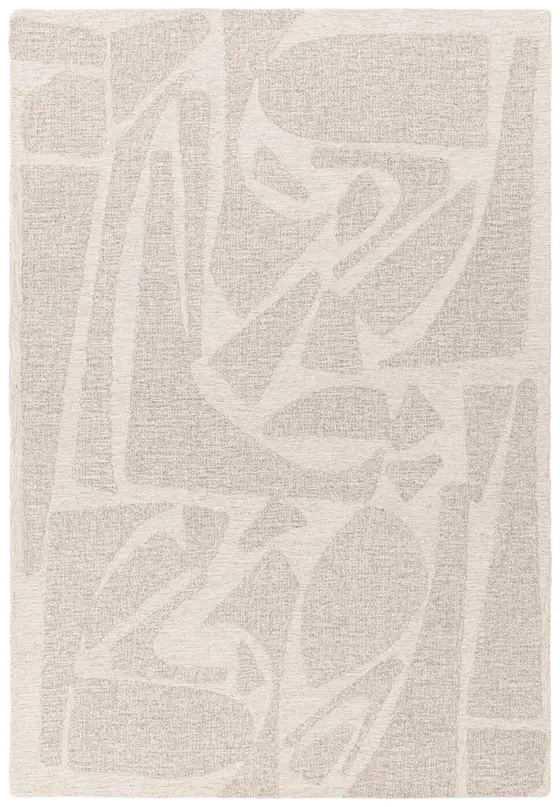
Modern abstract designs and plain textured rugs are available in these practical materials. A living room rug or bedroom rug in neutral tones such as beige or grey works with most wooden floors.
Common mistakes to avoid
Placing a damp rug straight onto wood, using rugs without underlay on varnished floors, and choosing very thick shaggy styles in busy areas are the most frequent errors. Jute and sisal dislike water and can leave marks if they get wet. Always check the product page for material, pile height and care instructions before purchase.
Frequently asked questions
Can I put a heavy wool rug directly on varnished floorboards?
Yes, provided you use a non-slip underlay. The underlay prevents the rug sliding and stops grit abrading the varnish. Vacuum regularly and rotate the rug to avoid pressure marks from furniture.
Do polypropylene rugs leave marks on hardwood?
They rarely mark when a proper rug pad is used. Polypropylene is water-tolerant and easy to clean, making these rugs suitable for areas where spills may occur. Keep the floor dry and vacuum beneath weekly.
How often should I move my rug on a wooden floor?
Rotate it every three months and lift it completely every six months to vacuum the floor underneath. This prevents dirt accumulating in one area and reduces the chance of uneven wear or discolouration.
Is it safe to use a shaggy rug on oak flooring?
Shaggy rugs can be used but need more maintenance. The deep pile hides grit that can scratch over time. Choose lower-pile alternatives or vacuum thoroughly and move the rug regularly to protect the wood.
What should I do if my rug has left a mark on the floor?
Light marks from pressure usually disappear after the rug is moved and the floor is cleaned. Deeper scratches may need professional sanding. Prevent future marks by using an underlay and keeping the area free of trapped grit.
Shop the guide
-
 Caruso Wool Rug in Brown
from £274.98
-
 Henley Wool & Viscose Rug in Silver
from £169.98
-
 Henley Wool & Viscose Rug in Sand
from £169.98
-
 Henley Wool & Viscose Rug in Sage
from £169.98
Related guides
- Rugs for wooden floors: protection, grip and style
- Should a Rug Be Lighter or Darker Than the Floor?
- Can rugs go on wet floors?
- Can a Rug Cause Damp or Mould on the Floor Underneath?
- How to stop a rug slipping
- All rug guides
Questions about a specific rug? Every product page lists the maker's size, material, pile height and care details. Delivery is free and tracked to England, Wales and mainland Scotland, and you have 14 days to change your mind. See delivery and returns.