
The overdyed and faded rug look explained
An overdyed rug is one that has been dyed a second time after weaving, often in a bold colour that is then deliberately faded or washed out to create a soft, vintage appearance with muted tones and subtle colour variations. The faded rug look mimics years of natural wear and sunlight exposure, giving a relaxed, lived-in feel that suits modern, boho and transitional interiors. This process can be applied to wool, viscose or polypropylene rugs and produces pieces that hide marks better than solid plain rugs while still providing a strong colour statement.
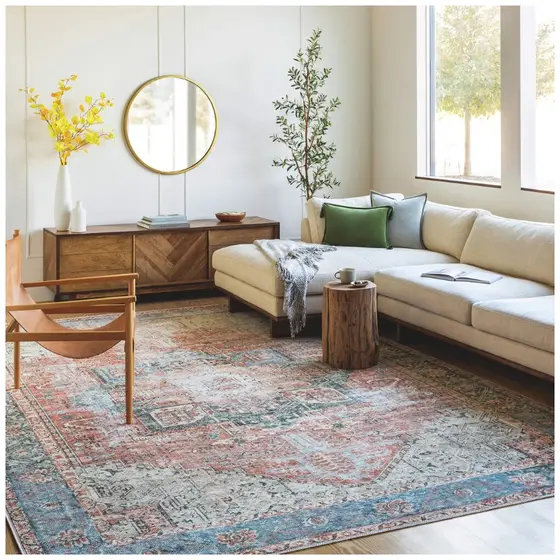
What is an overdyed rug?
An overdyed rug starts as a finished woven or tufted rug that then receives an additional dye bath. The second dyeing saturates the fibres unevenly, and a subsequent washing or chemical treatment removes some of the colour to leave a deliberately faded, patchy effect. The result is a rug with soft transitions between shades rather than crisp pattern edges.
This technique is popular because it combines the depth of colour with the softness of an aged piece. It works especially well on modern rugs that need to feel less clinical.
How the fading is achieved
After overdying, rugs are often tumbled or washed. This breaks down excess dye and softens the pile. The process is more common on viscose and wool because both fibres accept dye readily.
Design characteristics of the faded look
Faded overdyed rugs typically show:
- Muted base colours with hints of the original pattern still visible
- Soft colour bleeding at the edges of motifs
- A slightly distressed or vintage appearance
- Low-to-medium contrast between pattern and ground
These traits make the rugs easier to live with than high-contrast modern designs. They hide everyday marks and foot traffic better while still delivering colour. Many designs pair well with neutral sofas and wooden floors.
For living rooms a 160x230 cm rug or 200x290 cm rug in this style placed front-legs-on under the sofa leaves 30-60 cm of floor visible on all sides in most UK rooms.
Suitable materials and their trade-offs
Material choice affects how well the faded look holds up and how easy the rug is to maintain.
| Material | Advantages | Disadvantages |
|---|---|---|
| Wool | Resilient pile, soil-hiding, holds overdyed colour well | Sheds when new, needs regular vacuuming |
| Viscose (art silk) | Intense sheen that highlights faded areas, soft hand | Water-sensitive, prone to crushing and watermarks |
| Polypropylene | Stain-resistant, tolerant of spills, holds colour | Can look flat, less luxurious feel |
Wool and viscose blends are common in higher-end faded designs because the wool adds resilience while viscose adds shine. Pure polypropylene versions are practical for dining rooms and kitchens where spills are likely.
See our range of wool rugs and plain and textured rugs that use similar colour-washing techniques.
Choosing the right size for different rooms
Follow the same layout rules as with any rug but consider how the faded pattern will interact with furniture.
- Living room: Front-legs-on layout works best. A 3-seater sofa usually pairs with a 160x230 cm rug in smaller rooms or a 200x290 cm rug in larger ones, extending 15-30 cm past each end of the sofa.
- Dining room: Add at least 60 cm on every side of the table so chairs remain on the rug when pulled out. A 200x290 cm or larger size prevents the faded border from being hidden under chairs.
- Bedroom: Place the rug so it shows 50-60 cm on either side of the bed. A low-pile faded design is easier to keep clean than a shaggy version.
In small rooms reduce the border to 20 cm of visible floor. The soft colour transitions of an overdyed rug make it forgiving if the exact placement is not perfect.
Maintenance and long-term care
Overdyed rugs require the same care as their base material but the faded finish can hide some soiling.
- Vacuum regularly with a suction-only cleaner; avoid beater bars on viscose.
- Blot spills immediately; viscose versions must not be rubbed with water.
- Rotate the rug every six months to even out wear and light exposure.
Polypropylene overdyed rugs are the most tolerant of occasional damp mopping and are often chosen for busier households. Always follow the care instructions on the product page.
Styling tips for the overdyed look
The faded effect pairs well with both contemporary and traditional furniture. Layer a smaller faded rug over a larger plain jute or sisal base for added texture. In bedrooms, a muted overdyed design in soft blues or greys creates a calm feel. For dining areas choose versions with subtle geometric patterns that do not compete with tableware.
Many customers combine these rugs with grey rugs or beige and natural rugs elsewhere in the same open-plan space. The soft colour palette prevents clashing.
Hand-tufted and hand-woven constructions give the most authentic faded appearance because the dye penetrates the knots differently than in machine-made rugs.
Frequently asked questions
What is the difference between overdyed and vintage rugs?
Overdyed rugs are newly made then deliberately dyed and faded to look old. Genuine vintage rugs have aged naturally over decades. The overdyed version gives the appearance without the inconsistencies of true antiques.
Do overdyed rugs shed?
Only those made from wool will shed in the first few months. Viscose and polypropylene overdyed rugs do not shed. Regular vacuuming removes loose fibres quickly on wool versions.
Can you put an overdyed rug under a dining table?
Yes. Choose a size that extends at least 60 cm beyond the table on all sides so chairs stay on the rug. The faded pattern helps disguise chair scuffs and dropped food better than a solid colour.
Are faded rugs harder to keep clean?
The mottled appearance often hides light marks and dust better than plain rugs. However, viscose versions must be kept dry and cleaned carefully to avoid permanent watermarks.
Shop the guide
-
 Myrtle Avenue V Rug in Green
from £139.98
-
 Myrtle Avenue IV Rug in Brown & Cream
from £79.98
-
 Myrtle Avenue III Rug in Brown & Cream
from £79.98
-
 San Francisco Rug in Sage Green & Neutral
from £69.98
Related guides
- Vintage Distressed Rug Guide: How to Style Worn-Look Rugs
- Ikat, Aztec and Tribal-Inspired Rug Patterns Explained
- Tencel rugs: sustainable fibre explained
- Seagrass rugs explained
- Rug materials explained: wool, jute, viscose, polypropylene and more
- All rug guides
Questions about a specific rug? Every product page lists the maker's size, material, pile height and care details. Delivery is free and tracked to England, Wales and mainland Scotland, and you have 14 days to change your mind. See delivery and returns.