
Basement Rug Guide: Moisture-Resistant and Warming Options
Basement rugs must tolerate occasional dampness better than standard floor coverings while providing softness underfoot and visual warmth to otherwise cool, hard spaces. Polypropylene, polyester and recycled PET rugs resist water marks and dry quickly after spills or humidity spikes, unlike wool, viscose or jute which can stain or mark. In most UK basements a 160x230 cm or 200x290 cm rug placed front-legs-on under seating leaves 30-60 cm of floor visible around the edges and adds noticeable comfort without trapping moisture.
Choosing materials for damp basements
Basements in UK homes often sit below ground level where humidity can rise, especially after heavy rain. Select fibres that do not absorb water readily. Polypropylene rugs shrug off spills and dry fast; they suit utility rooms or play areas where damp is more likely. Recycled polyester (PET) rugs share similar tolerance. Pure wool rugs insulate well and feel warmer but soil easily if moisture appears regularly; reserve them for drier finished basements with good ventilation.
Flatweave or low-pile constructions reduce the surface area that can trap damp. Avoid viscose blends entirely in basements: the regenerated cellulose fibre marks permanently with water. Jute rugs dislike moisture and can leave dark patches on concrete floors. Check the product page for exact pile height and construction before ordering.
Link to practical options: polypropylene rugs or large rugs that cover seating areas without excess fabric near walls.
Sizing and layout rules for basement rooms
Follow the same spacing as upstairs rooms but allow slightly more floor border if the basement feels enclosed. Leave 30-60 cm of exposed floor around the rug perimeter in average-sized basements; reduce to 20 cm only in very small converted cellars. For sofas, choose a rug that extends 15-30 cm beyond each end. A front-legs-on layout works for most UK basement living areas: a 160x230 cm rug suits smaller sofas or compact rooms, while a 200x290 cm or 200x300 cm rug better accommodates a 3-seater and coffee table.
Under dining tables add at least 60 cm on every side so chairs remain fully on the rug when pulled out. In basement bedrooms place the rug so it shows 50-60 cm on each side of the bed. Runners 60-80 cm wide work well along narrow basement corridors but keep them away from any damp walls.
See 160x230 cm rugs and 200x290 cm rugs for common basement sizes.
Adding warmth without trapping moisture
Concrete floors in basements stay cold year-round. A medium-pile rug provides noticeable insulation underfoot without creating a thick layer that holds damp air. Many polypropylene and polyester rugs in this range feel soft yet spring back after foot traffic. Hand-tufted constructions with glued backings can work if the basement is only occasionally humid; avoid them near external doors where water might pool.
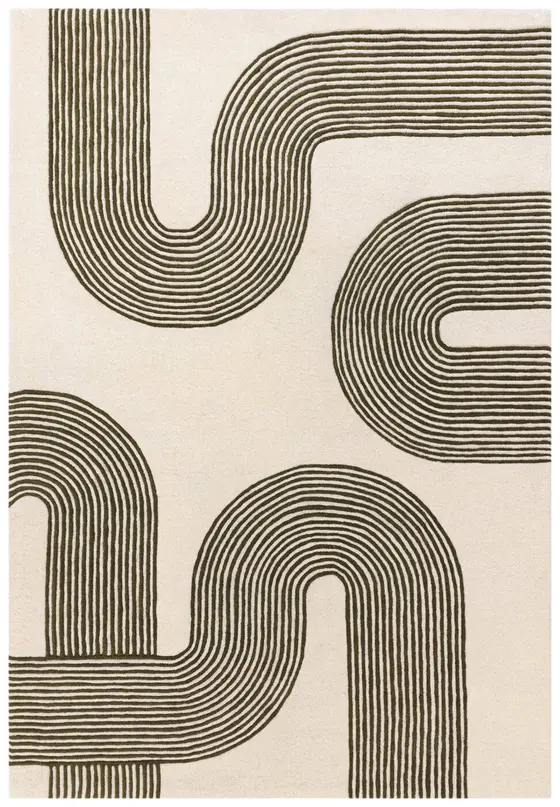
Plain or lightly textured rugs in cream, beige or grey reflect light and make the space feel less subterranean. Subtle patterns hide everyday marks better than solid colours. Machine-woven rugs usually lie flatter against uneven basement floors than hand-knotted pieces.
For warmer neutrals explore beige rugs or cream rugs.
Maintenance in lower-level rooms
Vacuum regularly with a beater-bar-free cleaner to avoid crushing synthetic fibres. Wipe polypropylene or polyester spills immediately with a dry cloth then dab with mild detergent solution; these fibres tolerate water far better than natural materials. Rotate the rug every six months to even out wear from basement doorways or high-traffic paths. If condensation appears on walls, improve ventilation before laying any rug. Never place rugs directly over damp patches; use a moisture meter on concrete before fitting.
Most synthetic rugs in the range clean easily with a damp cloth and mild soap. Avoid steam cleaners on polypropylene as heat can distort the fibres. For basement utility areas the rugs under £100 category often contains hard-wearing machine-made options that can be replaced economically if needed.
Style choices that suit basements
Modern abstract or geometric patterns brighten dimmer basement lighting. Persian-style designs in ocean or desert tones add depth without feeling dated. Recycled polyester rugs now come in contemporary prints that mimic more expensive wool and viscose looks while staying practical. For a cohesive feel match the rug to existing basement paint or furniture rather than trying to make it a focal point in a low-ceiling space.
Shopping the right Rug for your basement
Measure the intended area twice and note any floor unevenness. Read the product page for material, pile height and care instructions. Prioritise polypropylene or polyester for any basement with a history of damp. Wool works only in well-ventilated, dry conversions. Order the size that follows the 30-60 cm border rule for best visual balance. Free tracked delivery applies to every order to England, Wales and mainland Scotland.
| Material | Moisture Tolerance | Warmth Underfoot | Best Basement Use |
|---|---|---|---|
| Polypropylene | High – dries quickly | Moderate | High-traffic or utility areas |
| Recycled PET | High | Good with 10 mm pile | Living or play zones |
| Wool | Low – avoid standing water | Excellent | Dry finished basements only |
Practical basement rugs balance water tolerance, softness and style. The right choice makes the space usable and comfortable rather than an afterthought.
Frequently asked questions
Can I use a wool rug in a basement?
Only in fully dry, well-ventilated basements with no history of rising damp. Wool is resilient and insulating but can stain or mark if exposed to regular moisture. Most UK homeowners choose polypropylene or polyester for basement use and easier long-term care.
What size rug works best under a basement sofa?
For a standard 3-seater, a 200x290 cm rug placed front-legs-on gives 15-30 cm extension past each end and leaves 30-60 cm of floor showing. In smaller basements a 160x230 cm version maintains the same layout without crowding the room.
Do polypropylene rugs feel warm enough?
Medium-pile polypropylene rugs add noticeable comfort over concrete compared with bare floors. While not as insulating as wool, they provide practical warmth for everyday use and tolerate water better than natural fibres.
How do I stop a basement rug from smelling damp?
Choose synthetic fibres, ensure the concrete is fully dry before laying, and improve room ventilation. Vacuum weekly and rotate the rug to prevent trapped air. Immediate spill cleanup prevents odours.
Are recycled polyester rugs suitable for basements?
Yes. Recycled PET rugs are water-tolerant and dry quickly, making them a practical choice for lower-level rooms that may experience occasional humidity spikes.
Shop the guide
-
 Atlas Shaggy Rug in Emerald Green
from £59.98
-
 Atlas Shaggy Rug in Gunmetal Grey
from £59.98
-
 Atlas Shaggy Rug in Ivory Cream
from £59.98
-
 Atlas Shaggy Rug in Natural
from £59.98
Related guides
- Playroom rug guide: safe, soft and easy-clean options
- Garden room rug ideas: weather-resistant indoor-outdoor styles
- Recycled PET rugs: eco-friendly options
- Are outdoor rugs slip resistant when wet?
- What size rug do I need? A room-by-room guide
- All rug guides
Questions about a specific rug? Every product page lists the maker's size, material, pile height and care details. Delivery is free and tracked to England, Wales and mainland Scotland, and you have 14 days to change your mind. See delivery and returns.