
What is the softest rug material?
The softest rug material is usually a deep-pile polyester or a high-quality wool. Polyester feels instantly plush underfoot and is widely used in shaggy rugs, while wool offers a dense, naturally resilient softness that improves with age. Both outperform viscose, which can feel silky but flattens quickly, and polypropylene, which is more practical than luxurious.
How soft is wool?
Wool is one of the softest natural fibres for rugs. Its natural crimp and slight give create a cushioned feel that many people prefer for bedrooms and living rooms. A hand-tufted wool rug with 8-12 mm pile, such as the Metro Wool Rug in Taupe, delivers noticeable underfoot comfort while remaining hard-wearing.
Wool also hides dirt well and is naturally flame-resistant compared with most synthetics. The main drawbacks are initial shedding and the need for professional cleaning if heavily soiled. In a typical UK living room a 160x230 cm or 200x290 cm wool rug works well with a front-legs-on sofa layout, leaving 30-60 cm of floor visible around the edges.
Polyester and recycled polyester
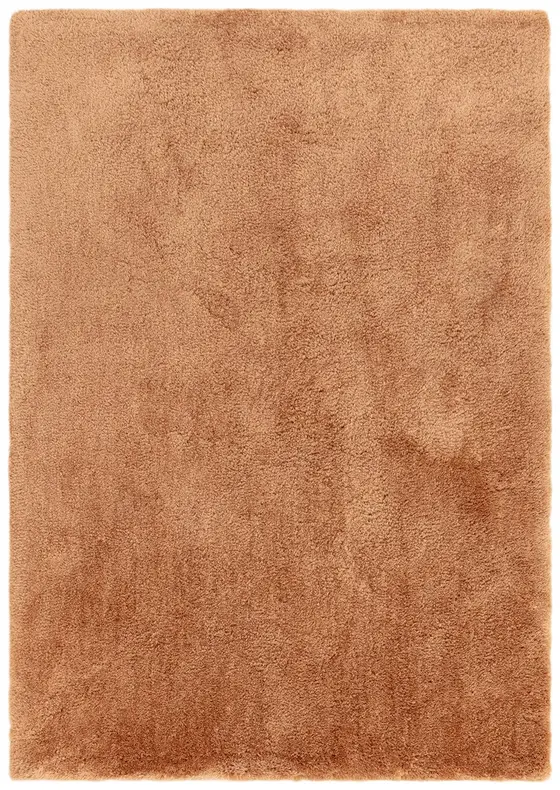
Modern polyester rugs, especially those labelled as recycled PET, can be extremely soft. Deep piles of 20-30 mm create the plush, cloud-like surface many buyers seek. The Opulence Shaggy Rug in Terracotta (approx. 30 mm pile) and the Ariana Shard Shaggy Rug in Multicoloured demonstrate how cut-and-loop polyester can feel softer than many wool options straight out of the box.
Polyester is also more water-tolerant than viscose and easier to keep clean than wool, although it can crush over time in high-traffic areas. For a small room a 120x170 cm polyester rug often suffices; larger spaces usually need at least 160x230 cm.
Viscose – soft but fragile
Viscose (sometimes sold as bamboo silk or art silk) feels wonderfully soft and has a distinctive sheen. The Blade Border Rug in Putty & Charcoal uses viscose with tip-shearing to give a luxurious hand. However, the fibre is sensitive to water, crushes easily and shows watermarks, making it best suited to low-traffic bedrooms rather than family living rooms or dining areas.
Pile height and softness
Pile height matters as much as the fibre itself. Shaggy rugs with 20 mm or taller pile almost always feel softer than low-pile options regardless of material. The Mirage Mineral Shaggy Rug in Green (20 mm) and the Opulence range both illustrate how extra height increases perceived softness. In bedrooms aim for the rug to extend 50-60 cm beyond each side of the bed; in living rooms keep 30-60 cm of floor showing around the rug perimeter.
Practical trade-offs
Choose wool for longevity and natural resilience; select polyester for immediate plushness and easier maintenance. Avoid placing deep-pile shaggy rugs under dining tables – chairs will drag and the pile will flatten. For dining, a low-pile or flatweave option with at least 60 cm extra on all sides of the table keeps chairs stable.
Jute and sisal, while hard-wearing, feel coarse and are not soft choices. Flatweaves have no pile at all so offer minimal cushioning.
Choosing the right size and type
Use these rules for common UK rooms:
- Living room: 160x230 cm or 200x290 cm for front-legs-on sofa placement; 200x290 cm suits most 3-seater sofas.
- Bedroom: rug should show 50-60 cm on each side of the bed.
- Dining: add 60 cm beyond the table on every side so chairs remain on the rug when pulled out.
- Small rooms: reduce border to 20 cm.
Plain and textured rugs in wool or polyester often deliver the best balance of softness and everyday practicality. See the full range of wool rugs, shaggy rugs or plain & textured rugs.
Care considerations
Check the product page for construction and care instructions. Most polyester shaggy rugs can be spot-cleaned; wool benefits from regular vacuuming on both sides when new to reduce shedding. Never use harsh chemicals on viscose.
Frequently asked questions
Is wool softer than polyester?
It depends on pile height and construction. A deep-pile polyester shaggy rug often feels plusher initially, while a good wool rug develops a softer, more resilient hand over time. Wool also resists crushing better than most polyester.
Are shaggy rugs hard to clean?
Shaggy rugs with long pile trap more dirt and are harder to vacuum thoroughly than low-pile rugs. Polyester versions tolerate spot-cleaning better than wool. Regular vacuuming from day one helps prevent matting.
Can you put a soft shaggy rug in a dining room?
Generally no. Chair legs sink into deep pile, making movement difficult and causing permanent crushing. Choose a low-pile or flatweave rug that extends 60 cm beyond the table on all sides instead.
Does viscose make a good soft rug?
Viscose feels very soft and looks luxurious but it is prone to watermarks, crushing and flattening. It suits low-traffic bedrooms far better than busy living rooms or areas where spills are likely.
What size soft rug do I need for a 3-seater sofa?
A 200x290 cm rug usually works best with a front-legs-on layout, allowing the rug to extend 15-30 cm past each end of the sofa. In smaller rooms a 160x230 cm version can suffice.
Shop the guide
-
 Fossay Checkered Shaggy Rug in Dark Brown
from £69.98
-
 Izaline Checkered Shaggy Rug in Dark Brown
from £69.98
-
 Deline Shaggy Rug in Green
from £69.98
-
 Deline Shaggy Rug in Dark Brown
from £69.98
Related guides
- What is the most durable rug material?
- Rug in Front of the Kitchen Sink: Size and Material
- Why does my rug smell after getting wet?
- Should you rotate a rug, and how often?
- Rug materials explained: wool, jute, viscose, polypropylene and more
- All rug guides
Questions about a specific rug? Every product page lists the maker's size, material, pile height and care details. Delivery is free and tracked to England, Wales and mainland Scotland, and you have 14 days to change your mind. See delivery and returns.