
Rugs for open-plan extensions: zoning without walls
Rugs divide an open-plan kitchen-diner into distinct living, dining and cooking zones using colour, texture and placement. A large rug under the seating area, a different style under the table and a hard-wearing runner in the kitchen create clear visual boundaries. Common UK sizes such as 160x230 cm or 200x290 cm work best for most extensions when placed to leave 30-60 cm of floor visible around the edges.
Choosing the right sizes for each zone
In an open-plan kitchen-diner extension the rug under the sofa should extend 15-30 cm past each end. For most UK living rooms a 160x230 cm or 200x290 cm rug suits a front-legs-on layout. A 3-seater sofa usually pairs with a 200x290 cm rug, or 160x230 cm in a smaller extension.
Under a dining table leave at least 60 cm on every side so chairs remain on the rug when pulled out. In the kitchen a runner 60-80 cm wide placed in high-traffic areas defines the cooking space.
Leave 30-60 cm of bare floor around each rug in larger extensions, or 20 cm in compact ones. This prevents the room from feeling crowded and emphasises the zoning effect.
Material choices for different zones
Living areas benefit from wool rugs because wool is naturally resilient and soil-hiding. Wool and viscose blends add softness and subtle sheen but require care around spills. For easier cleaning choose low-maintenance synthetics.
Dining zones need rugs that tolerate chair movement. Flatweaves or low-pile options avoid crushing, while polypropylene rugs handle accidental food and drink well although they can flatten over time.
Kitchen areas demand water-tolerant and stain-resistant surfaces. Polypropylene or recycled polyester rugs cope with splashes better than natural fibres such as jute or sisal, which can mark if wet. Avoid deep pile near cookers.
Wool versus synthetic fibres
Wool offers better resilience than most synthetics but sheds when new. Polypropylene rugs resist stains and moisture yet can feel less luxurious and are not heat-resistant. A wool-viscose mix gives a balance of softness and shine but viscose is prone to watermarks and crushing.
Zoning with colour, pattern and texture
Use a neutral beige or cream rug in the living zone to anchor the sofa, then introduce a bolder abstract design under the dining table. Repeating a colour from the kitchen units in a runner ties the scheme together.
Texture changes help the eye recognise boundaries. A shaggy or high-pile rug feels cosy underfoot in the seating area, while a low-pile or flatweave rug under the table stays practical. In the kitchen a hard-wearing low-pile runner prevents trips and allows quick sweeping.
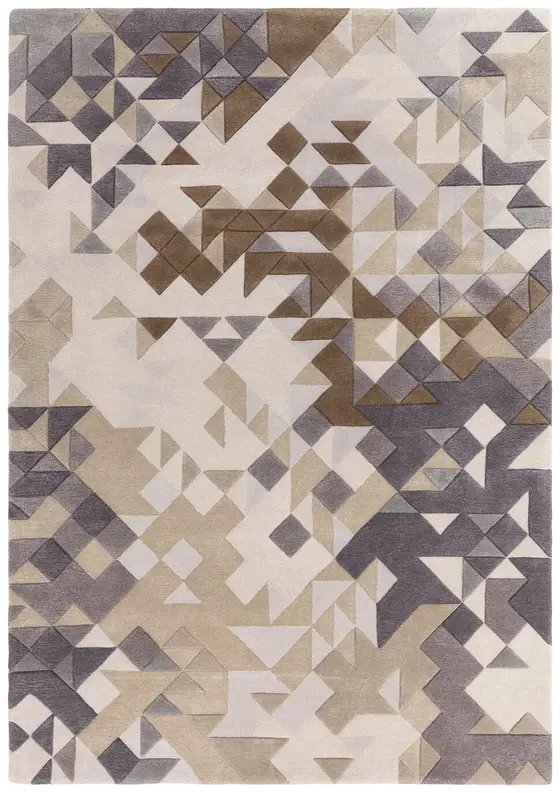
Modern abstract patterns work well in open-plan extensions because they hide marks better than plain colours. Geometric or painterly designs in muted tones suit both contemporary and traditional kitchens.
Practical layout examples
Place one large rug under the main seating group so the front legs of the sofa sit on it and the back legs remain on the floor. Position a second rug centred under the dining table with enough clearance for chairs. A narrow runner between the kitchen island and sink creates a third distinct zone.
In L-shaped extensions run the living rug parallel to the longest wall and keep the dining rug perpendicular to it. This angular change reinforces the separation. Keep all rugs within the same colour family for cohesion or contrast one zone strongly to emphasise its function.
For a unified look choose rugs from the same collection in different colourways. Many machine-made ranges offer coordinated designs across multiple sizes.
Maintenance and safety tips
Check the product page for construction and care instructions. Hand-tufted rugs have a glued backing that can weaken if soaked, while machine-made polypropylene rugs tolerate regular vacuuming and occasional spot cleaning. Wool rugs benefit from rotation every six months to even out wear.
In cooking zones avoid rugs with long fringes near hobs. Low-pile or flat styles reduce the risk of tripping and are easier to keep clean. Always allow air circulation under rugs placed on hard floors to prevent condensation in extensions with underfloor heating.
Recommended rug types for open-plan extensions
Modern abstract rugs add visual interest. Plain textured rugs offer versatility across zones. Large wool rugs bring warmth to living areas, while polypropylene options suit high-traffic kitchen and dining spaces. Handmade rugs give character but usually cost more and need gentler care.
Consider large rugs for the living zone, modern abstract designs for dining and practical kitchen rugs for the cooking area. Mixing pile heights and materials creates clear divisions while keeping the extension feeling open and connected.
| Zone | Typical size | Best materials | Pile height advice |
|---|---|---|---|
| Living | 160x230 cm or 200x290 cm | Wool, wool-viscose | Medium to high for comfort |
| Dining | Extend 60 cm beyond table | Polypropylene, low-pile polyester | Low to avoid crushing |
| Kitchen | Runner 60-80 cm wide | Polypropylene, recycled polyester | Low pile for safety and cleaning |
Shop the full selection of living room rugs or browse dining room rugs to find pieces that suit your extension layout.
Frequently asked questions
How many rugs do I need in an open-plan kitchen diner?
Most extensions work well with two or three rugs. One defines the living area, another anchors the dining table and a runner or small rug can separate the kitchen workspace. Using too many can make the space feel cluttered so limit to clear functional zones.
Should all rugs in an open-plan extension match?
They do not need to be identical. Repeating two or three colours across different designs creates harmony. Contrasting textures and pile heights between zones actually strengthens the visual divisions while preventing the room from looking flat.
What rug size works best under a dining table in an extension?
Measure the table and add at least 60 cm on every side so chairs stay fully on the rug when pulled out. For a six-seater table this often means a rug around 200x300 cm or larger depending on exact table dimensions and room layout.
Are wool rugs suitable near a kitchen in an open-plan space?
Wool rugs perform best in the living zone away from sinks and cookers. They resist soiling better than many synthetics but absorb moisture and require more careful cleaning. Reserve wool for seating areas and choose synthetic rugs closer to food preparation.
Can I use the same rug design in different colours for each zone?
Yes. Many collections offer the same pattern in multiple colourways and sizes. This approach gives a coordinated yet zoned look. For example a neutral version in the living area and a bolder tone under the dining table can work effectively.
Shop the guide
-
 Amelie Lana Rug in Rust With Faded Blue Hues
from £29.98
-
 Atlas Shaggy Rug in Emerald Green
from £59.98
-
 Atlas Shaggy Rug in Gunmetal Grey
from £59.98
-
 Atlas Shaggy Rug in Ivory Cream
from £59.98
Related guides
- Studio flat rug ideas for open-plan living and zoning
- Rugs for new build homes: modern layouts and open-plan spaces
- Sage green rugs: how to style with sofas, floors and walls
- How to Clean a Rug Without a Vacuum Cleaner
- Rugs for open-plan living: zoning with rugs
- All rug guides
Questions about a specific rug? Every product page lists the maker's size, material, pile height and care details. Delivery is free and tracked to England, Wales and mainland Scotland, and you have 14 days to change your mind. See delivery and returns.