
Round vs Rectangular Rugs: Which Shape is Right?
Rectangular rugs suit most UK living rooms and dining areas because they align with straight furniture lines and standard room proportions, while round rugs work well as feature pieces in smaller spaces or to soften square layouts. The best choice depends on your room shape, furniture placement and the visual effect you want. Rectangular rugs remain the practical default for the majority of British homes; round rugs add interest when used deliberately.
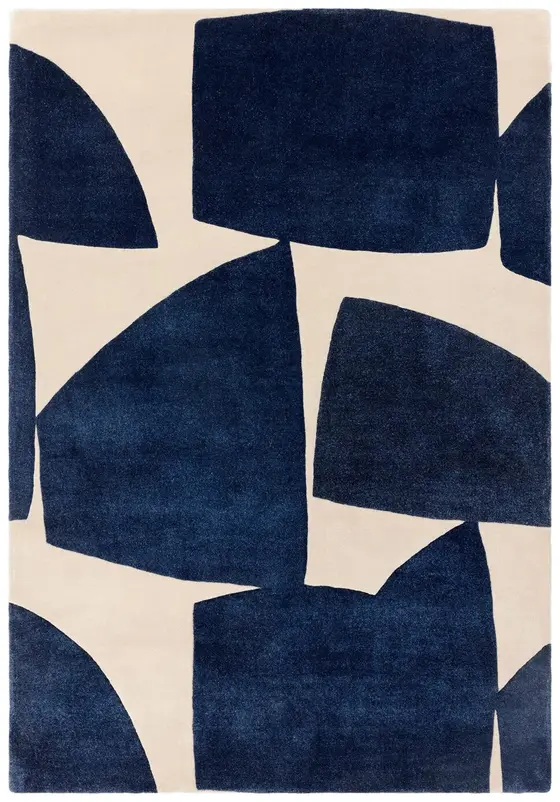
Living room layouts
In most UK living rooms a rectangular rug creates a balanced anchor for sofas and armchairs. Leave 30-60 cm of floor visible around the edges. For front-legs-on placement the rug should extend 15-30 cm beyond each end of the sofa. A 160x230 cm or 200x290 cm rectangular rug usually works under a three-seater sofa in average-sized rooms; opt for 120x170 cm in smaller spaces.
Round rugs in living rooms draw the eye to a central coffee table or seating cluster. They suit square or open-plan areas where you want to soften hard lines. Place a round rug so that at least the front legs of the main seating sit on it, keeping the same 30-60 cm border of exposed floor. Because round rugs lack straight edges they can make furniture alignment feel less rigid, which some homeowners prefer in relaxed living spaces.
160 x 230 cm rugs are a popular rectangular starting point for living rooms, while larger options give more flexibility under multiple pieces of furniture.
Practical trade-offs
- Rectangular rugs are easier to align with walls and doors.
- Round rugs can highlight a focal point but leave more awkward floor space at the edges.
- Both shapes must follow the same border rule to avoid looking lost or oversized.
Bedroom options
Under a bed the rug should show about 50-60 cm on either side. Rectangular rugs are straightforward here: a 200x290 cm or 200x300 cm size placed halfway under the bed leaves practical bedside runners on each side. This layout keeps feet on the rug when getting in and out of bed.
Round rugs in bedrooms are less common but can work beside the bed as accent pieces or in smaller bedrooms where a full rectangular rug would dominate. A round rug next to the bed avoids the need for two separate runners and can soften the room's geometry. However, you will usually still need additional rectangular runners or a small rectangular rug on the opposite side for symmetry and coverage.
Many UK buyers choose bedroom rugs in neutral tones; plain and textured rugs in cream, beige or grey hide footprints well in high-traffic bedside areas.
Dining room choices
Dining tables are almost always rectangular or square, so rectangular rugs remain the most practical option. Add at least 60 cm on every side of the table so chairs stay fully on the rug when pulled out. This prevents tipping and protects floors from chair legs. A 200x290 cm or larger rectangular rug usually fits a six-seater table; measure your table and add 120 cm to both length and width as a starting guide.
Round rugs under round dining tables create a cohesive look. The same 60 cm clearance rule applies so chairs do not catch the edge. Round rugs suit smaller circular tables in kitchens or breakfast areas but become harder to source in the sizes needed for larger family tables. Rectangular rugs are easier to find in the exact dimensions required for dining.
See the full range of dining room rugs or browse large rugs for tables that seat six or more.
Material considerations
Shape choice interacts with material performance. Wool rugs offer resilience and soil-hiding properties that suit both shapes, but they shed when new; they are a good choice for wool rugs in living rooms. Polypropylene rugs tolerate spills and are easier to keep clean, making them practical for dining areas and families with children. Viscose blends give a soft, shiny finish but mark easily with water, so avoid them in busy dining rooms regardless of shape.
Flatweave and low-pile constructions work in both rectangular and round formats but show wear faster in high-traffic zones. Shaggy rugs add texture; rectangular versions are simpler to vacuum, while round shaggy rugs can trap more dust at the curved edges. Always check the product page for pile height, construction and care instructions before deciding.
Hand-tufted rugs have a glued backing; this applies equally to round and rectangular designs. Hand-knotted rugs are more durable but are less common in round formats.
Visual effects and room shape
Rectangular rugs reinforce the linear feel of most British rooms and work with standard door placements and fitted furniture. They make narrow rooms appear longer when laid in the same direction as the longest wall. Round rugs break up strong rectangular architecture and can make small square rooms feel larger by avoiding harsh corners. In open-plan living-dining spaces a round rug in the seating zone can visually separate it from a rectangular dining rug.
Use round rugs to highlight circular features such as a round pedestal table or curved bay window. In long, narrow hallways a runner is the usual choice, but a small round rug can soften the end of a landing or provide definition in an awkward alcove.
Modern and abstract rugs are available in both shapes; geometric patterns often look sharper on rectangular formats while organic designs suit round rugs.
Sizing and buying tips
Common UK rectangular sizes are 120x170 cm, 160x230 cm, 200x290 cm and 200x300 cm. Runners are typically 60-80 cm wide. Round rugs are sold by diameter; choose a diameter that matches the equivalent rectangular size for your layout. Always measure the intended floor space twice and mark it out with tape before ordering.
Check the product pages for exact available sizes, material, pile height, construction type and care guidance. Free tracked delivery applies to every order to England, Wales and mainland Scotland. You have 14 days after delivery to change your mind.
For budget options see rugs under £100. Larger wool and contemporary designs are listed under large wool rugs.
| Room | Best shape for most UK homes | Key sizing rule |
|---|---|---|
| Living room | Rectangular | 15-30 cm past sofa ends, 30-60 cm border |
| Bedroom | Rectangular | 50-60 cm visible each side of bed |
| Dining area | Rectangular | 60 cm clearance on all sides of table |
| Small square room | Round (as feature) | Maintain 30-60 cm border |
Frequently asked questions
Can I use a round rug in a rectangular living room?
Yes. A round rug can soften a rectangular living room when placed centrally under a coffee table or in a seating zone. Keep 30-60 cm of floor showing around the edge and ensure the main sofa front legs sit on the rug. It works best in square or open-plan layouts rather than narrow rooms.
Are round rugs harder to clean than rectangular ones?
Slightly. Curved edges can trap dust and are fiddlier to vacuum, especially in shaggy or high-pile styles. Rectangular rugs align better with standard vacuum paths. Choose low-pile or polypropylene round rugs if ease of cleaning is a priority.
What size round rug for a 160x230 cm rectangular equivalent?
Look for a round rug of approximately 200-220 cm diameter to achieve similar coverage. Always measure your furniture layout first. The same border and clearance rules apply regardless of shape.
Do round rugs work under dining tables?
Only if the table is round. The rug must be large enough to keep all chair legs on the surface when chairs are pulled out (add 60 cm clearance). Rectangular rugs are more practical for standard rectangular dining tables found in most UK homes.
Is it better to buy matching rectangular and round rugs?
Not necessary. Many UK homes use one shape per room. If you want coordination, choose similar colours or patterns from the same collection in the required shapes. Plain wool or neutral polypropylene rugs are easiest to mix.
Shop the guide
-
 Myrtle Avenue V Rug in Green
from £139.98
-
 Myrtle Avenue V Rug in Brown
from £79.98
-
 Myrtle Avenue IV Rug in Brown & Cream
from £79.98
-
 Myrtle Avenue III Rug in Brown & Cream
from £79.98
Related guides
- Square vs Rectangular Rugs: Choosing the Right Shape
- Round Rug Sizes Guide for UK Homes
- Runner vs Rug: When to Use Each in Your Home
- Rug vs Carpet: Pros, Cons and Best Choice for UK Homes
- Rugs under a dining table: size, shape and material
- All rug guides
Questions about a specific rug? Every product page lists the maker's size, material, pile height and care details. Delivery is free and tracked to England, Wales and mainland Scotland, and you have 14 days to change your mind. See delivery and returns.