
Should your rug match your curtains, cushions or sofa?
Your rug does not need to match your curtains exactly, nor copy the exact shade of your sofa or cushions. Instead, pick up one or two colours or tones from them so the whole room feels connected. A well-chosen contrast or complementary texture often works better than strict matching and avoids a flat, catalogue look.
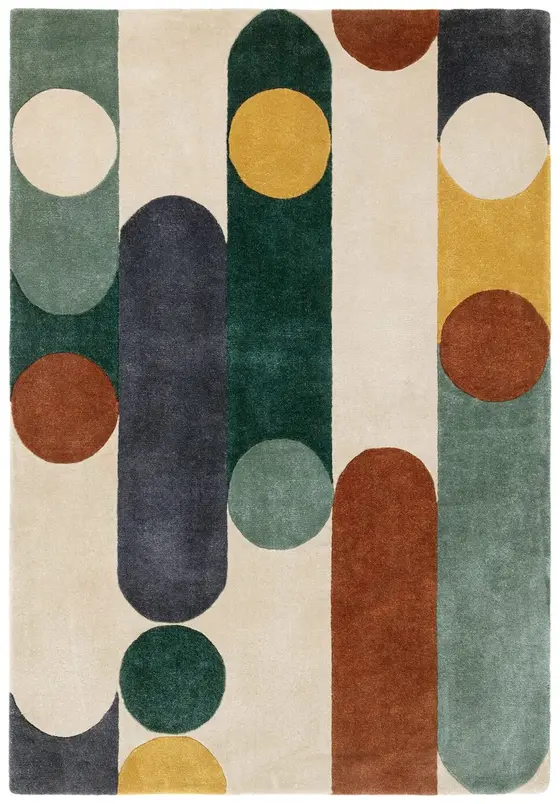
Colour coordination rules
Start by looking at the dominant colour in your curtains. If they are a strong blue, a rug in a softer blue or a neutral with blue accents will tie the room together without looking forced. The same principle applies to cushions: choose a rug that echoes their main tone rather than duplicating the exact fabric.
For sofas, the rug usually sits in front or partly underneath. A 160x230 cm (160 x 230 cm rugs) or 200x290 cm rug works for most UK living rooms. With a dark leather sofa, a lighter cream rug or beige design prevents the room feeling heavy. With a light fabric sofa, a rug with deeper tones adds definition.
Practical checklist:
- Pick up no more than three colours from curtains, cushions and sofa combined.
- Use the largest area of floor colour as your rug base tone.
- Avoid matching every single element; one linking colour is enough.
Pattern or plain?
If your curtains have a bold pattern, a plain or subtly textured rug gives the eye somewhere to rest. Conversely, plain curtains and sofa allow a patterned rug to become the focal point.
Modern rugs in geometric or abstract styles can pull together different coloured cushions without competing with patterned curtains. For example, a multicoloured abstract rug can contain tones from both curtains and cushions while staying neutral enough for the sofa.
Scale and proportion
Pattern scale matters. Large-scale curtain patterns pair best with smaller-scale rug patterns or plain rugs. Small all-over patterns on cushions work with larger rug motifs. In a dining room, choose a rug large enough to keep all chair legs on it when pulled out – usually adding 60 cm on every side of the table. Dining room rugs in low-pile constructions are easier to keep clean and move chairs on.
Texture choices
Texture creates harmony even when colours differ slightly. A soft wool pile rug adds warmth against smooth linen curtains. A flatweave kilim-style rug contrasts nicely with velvet cushions. Consider pile height carefully: high-pile shaggy rugs suit bedrooms but can trap crumbs in dining areas.
Wool rugs feel luxurious and are resilient under furniture legs. Polypropylene options are more stain-resistant and tolerate occasional spills better, useful near sofas where drinks are carried. Viscose blends give a silky look but mark easily with water, so avoid them in busy family rooms.
Common UK sizes to consider:
- Living rooms: 160x230 cm or 200x290 cm for front-legs-on layouts.
- Small rooms: reduce to 120x170 cm and leave at least 20 cm of floor showing.
- Bedrooms: allow 50-60 cm of rug showing each side of the bed.
Room-specific guidance
In living rooms the rug often anchors the seating area. A living room rug in neutral tones with subtle pattern works with almost any curtain and cushion combination. Grey rugs pair well with blue or green curtains; beige rugs sit comfortably with most natural linen or cream curtains.
Bedroom rugs can be more decorative. A soft pile under bare feet feels pleasant. Here you can afford to match the rug more closely to cushion tones since foot traffic is lower. Bedroom rugs in cream, beige or soft grey are popular choices.
Kitchen and dining areas need practical rugs. Low-pile polypropylene or polyester rugs are easier to keep clean. Avoid high-pile or viscose near food preparation. A runner 60-80 cm wide works well in narrow kitchens.
Common mistakes to avoid
Matching everything exactly creates a bland, matchy-matchy result that dates quickly. Buying a rug that is too small makes the room feel smaller and leaves furniture looking unbalanced. Placing a dark rug with very dark curtains can make the space feel closed in. Ignoring pile height leads to practical problems – a thick shaggy rug under a dining table will annoy everyone who tries to pull out a chair.
Another frequent error is choosing purely on colour without checking construction. A beautiful multicoloured design may be unsuitable if made from water-sensitive fibres in a household with children or pets.
Practical buying checklist
Before purchasing:
- Measure your floor space and furniture layout accurately.
- Collect fabric swatches from curtains, sofa and cushions.
- Decide on the main function – hard-wearing, soft underfoot, easy clean, or decorative.
- Choose construction: hand-tufted for detail, machine-made for uniformity and value.
- Check care instructions on the product page – most modern rugs are vacuum-only, some allow gentle spot cleaning.
Wool offers natural resilience but will shed for the first few weeks. Polypropylene tolerates water and stains but can flatten under heavy furniture. Blends of wool and viscose give shine and softness but require more careful handling.
| Room | Recommended rug approach | Typical size |
|---|---|---|
| Living room | Link 1-2 colours from curtains/sofa, add texture contrast | 160x230 or 200x290 cm |
| Bedroom | Softer tones, can match cushions more closely | Extend 50-60 cm each side of bed |
| Dining room | Low pile, practical fibres, larger than table | Table + 60 cm all sides |
Neutral rugs in beige, cream or grey give flexibility if you change curtains or cushions later. Adding pattern through the rug brings interest when soft furnishings are plain. Either route works provided the rug relates to the rest of the room rather than fighting it.
Modern abstract and geometric rugs are particularly forgiving. A design that contains several tones from your existing scheme will look intentional even if it does not match any single item exactly. This approach also makes future changes easier – new cushions can be chosen to pick out different threads from the same rug.
Frequently asked questions
Can my rug be a completely different colour to my curtains?
Yes. Strong contrast can work well when the rug tone complements the curtain colour, for example a warm beige rug with cool blue curtains. The room will still feel cohesive if the rug relates to another element such as the sofa or cushions.
Should I match my rug to my largest piece of furniture?
Not necessarily. The rug usually looks best when it anchors the seating group rather than copying the sofa colour. A neutral or subtly patterned rug often flatters a bold sofa. With a 3-seater sofa, a 200x290 cm rug in a front-legs-on layout gives balance without the need to match fabric tones exactly.
Is it better to have a plain rug with patterned curtains?
Usually yes. Plain or low-pattern rugs let bold curtains take centre stage and prevent the room looking busy. Textured plain rugs add interest through pile height or weave rather than colour or motif. This combination is easier to live with long-term.
What rug material works best with velvet cushions?
Wool or wool-viscose blends provide good contrast in both texture and light reflection. The natural slight sheen of wool complements velvet without competing. Avoid very high-pile shaggy rugs as they can look messy next to smooth velvet. Low to medium pile is more practical.
How do I choose a rug if my curtains and sofa are both neutral?
Introduce subtle pattern or a stronger accent colour through the rug. Abstract or geometric designs in soft tones of green, blue or rust can add personality while staying calm. Beige and cream rugs also work but choose one with texture or slight tonal variation to avoid a flat look.
Shop the guide
-
 Myrtle Avenue V Rug in Green
from £139.98
-
 Myrtle Avenue IV Rug in Brown & Cream
from £79.98
-
 Myrtle Avenue III Rug in Brown & Cream
from £79.98
-
 San Francisco Rug in Sage Green & Neutral
from £69.98
Related guides
- How to mix patterned rugs and cushions
- Teen bedroom rug ideas that match their style
- Rugs for Rooms with a Sofa Bed or Guest Bed
- Ochre and mustard rugs: best sofa and wall colour combinations
- How to choose a rug for a living room
- All rug guides
Questions about a specific rug? Every product page lists the maker's size, material, pile height and care details. Delivery is free and tracked to England, Wales and mainland Scotland, and you have 14 days to change your mind. See delivery and returns.