
Living room rug ideas for every style and layout
Choosing the right living room rug depends on your sofa layout, the size of the room and the overall style. A 160x230 cm or 200x290 cm rug usually works best with a three-seater sofa in a front-legs-on arrangement, leaving 30-60 cm of floor visible around the edges in most UK rooms. Neutral tones such as beige, cream or grey pair easily with both modern abstract patterns and classic Persian-style designs while polypropylene or wool options offer different practical benefits depending on your household.
Choosing the right size
In most UK living rooms a rug should leave 30-60 cm of bare floor showing around the perimeter. In smaller rooms 20 cm is acceptable. For a standard three-seater sofa the rug needs to extend 15-30 cm beyond each end. A front-legs-on layout is the most common solution: the front sofa legs sit on the rug while the back legs remain on the floor. This works well with a 160x230 cm rug in compact rooms or a 200x290 cm rug in larger spaces. A 200x300 cm size gives a similar footprint with slightly more length.
Under a coffee table the rug should be at least 30 cm larger on every side so feet stay on the rug when seated. Measure your seating area first and add the required border before selecting from 160x230 cm rugs or 200x290 cm rugs.
Small room layouts
In tighter spaces a 120x170 cm rug can anchor two armchairs or sit fully under a compact coffee table. Keep the border to 20 cm and avoid letting the rug touch the skirting boards.
Layout options by sofa arrangement
Front-legs-on remains the most practical choice for UK living rooms. The rug defines the seating zone without requiring an oversized piece. For L-shaped sofas a larger 200x290 cm or 200x300 cm rug often covers both sections of the L while still showing floor around the outer edges.
All-legs-on layouts suit open-plan rooms but need a rug at least 240 cm wide. In very small rooms a smaller rug placed centrally under the coffee table can still anchor the seating without overwhelming the floor.
- Measure the full seating arrangement including any footstools.
- Add 15-30 cm extension past the outer edges of the sofa.
- Check that chairs or stools remain on the rug when pulled out.
- Leave consistent border widths on all visible sides.
Style and colour matching
Modern living rooms often suit abstract or geometric patterns in grey, blue or ochre. Traditional rooms work well with Persian-style or vintage-look rugs in desert, putty or muted terracotta tones. Neutral schemes benefit from textured cream, beige or natural rugs that add warmth without competing with wall colours.
For a calm look choose plain or low-pile designs in cream and ivory or beige and natural. Bold colour can be introduced through a statement rug in emerald green, burnt orange or moss, provided the rest of the room remains restrained.
Wool rugs offer natural resilience and soil-hiding properties, making them suitable for busy households. Polypropylene rugs tolerate spills better and are easier to keep clean, though they can show crushing over time. Viscose blends provide a soft lustre but mark easily with water.
Modern interiors
Abstract shapes and clean lines pair with machine-woven polypropylene or polyester rugs. The modern and abstract collection includes options such as the Matrix 85 Arches in amber or the Rocco Arrow in grey that add graphic interest.
Traditional and vintage
Persian-style and vintage-look rugs bring pattern and depth. The Shisha Persian-style rug in desert or the Rugged Persian-style rug in ocean provide classic motifs scaled for contemporary rooms. These designs look balanced against leather sofas or wooden furniture.
Practical material considerations
Wool is resilient and flame-resistant relative to most synthetics, though it sheds when new. Polypropylene resists stains and copes with occasional damp but can crush and is not heat-resistant. Polyester offers softness and colour clarity. Blends of wool and viscose give a silky hand-feel but require more careful maintenance because viscose is water-sensitive and prone to watermarking.
High pile (over 20 mm) feels luxurious underfoot but shows footprints and needs regular vacuuming. Low pile or flatweave rugs are easier to keep clean and suit rooms with higher foot traffic. Shaggy styles in polypropylene such as the Atlas in emerald green or burnt orange add texture while remaining practical.
Colour schemes that work
Grey rugs remain versatile and hide everyday marks. Blue and navy add depth against neutral walls. Green rugs introduce a natural link to houseplants or outdoor views. Earth tones such as sand, putty and ochre sit comfortably with both Scandi and industrial interiors. Multicoloured high-low pile designs like the Ariana Shard or Ripple can tie several colours together when the room already contains mixed textiles.
When selecting a colour, view the rug in the actual room lighting. North-facing rooms benefit from warmer tones such as sand or ochre; south-facing spaces can carry cooler greys and blues.
Shopping the right rug
Start by deciding on size and layout, then narrow by material and pile height. Check the product page for exact dimensions, construction method and care instructions. Hand-tufted rugs have a glued backing that requires gentle cleaning; machine-woven polypropylene can usually be spot-cleaned with mild detergent.
Consider traffic flow. A low-pile wool rug such as the Barnaby in sand or the Metro in blue offers durability in busy areas. For easier maintenance the Canvas Balance in natural or Laurent designs in beige provide good all-round performance.
| Layout | Recommended size | Best for |
|---|---|---|
| Front legs on (standard room) | 200x290 cm | Three-seater sofa |
| Front legs on (small room) | 160x230 cm | Compact seating |
| All legs on | 200x300 cm or larger | Open-plan spaces |
| Coffee table only | 120x170 cm | Minimalist rooms |
Explore the full range of living room rugs, wool rugs or polypropylene rugs to match your exact requirements.
Frequently asked questions
What size rug do I need for a three-seater sofa?
For a three-seater sofa in a standard UK living room choose a 200x290 cm rug and position it so the front legs sit on the rug with 15-30 cm extending past each end. In smaller rooms a 160x230 cm size often suffices while still leaving 30 cm of floor visible around the edges.
Should the rug go under the sofa or just the front legs?
Front-legs-on is the most practical layout for most British living rooms. It defines the seating area without needing an excessively large rug. All-legs-on requires a significantly bigger rug and is best reserved for open-plan spaces where the full footprint can be accommodated.
Are wool or polypropylene rugs better for living rooms?
Wool offers natural resilience and hides soil well but needs careful stain treatment. Polypropylene tolerates spills and water better and is generally easier to keep clean, though it can show crushing marks over time. Choose according to your household’s likely mess level.
How do I choose a rug colour for a neutral living room?
Beige, cream, sand or light grey rugs add texture without overpowering neutral walls. Add subtle pattern through a low-contrast abstract or Persian-style design. Test the shade in your room’s natural light before buying.
What pile height works best with children or pets?
Low pile (under 15 mm) or flat styles are easier to vacuum and less likely to trap hair or crumbs. Medium pile around 10-20 mm offers comfort without excessive maintenance. Very high shaggy piles need more frequent grooming.
Shop the guide
-
 Amelie Lana Rug in Rust With Faded Blue Hues
from £29.98
-
 Atlas Shaggy Rug in Emerald Green
from £59.98
-
 Atlas Shaggy Rug in Gunmetal Grey
from £59.98
-
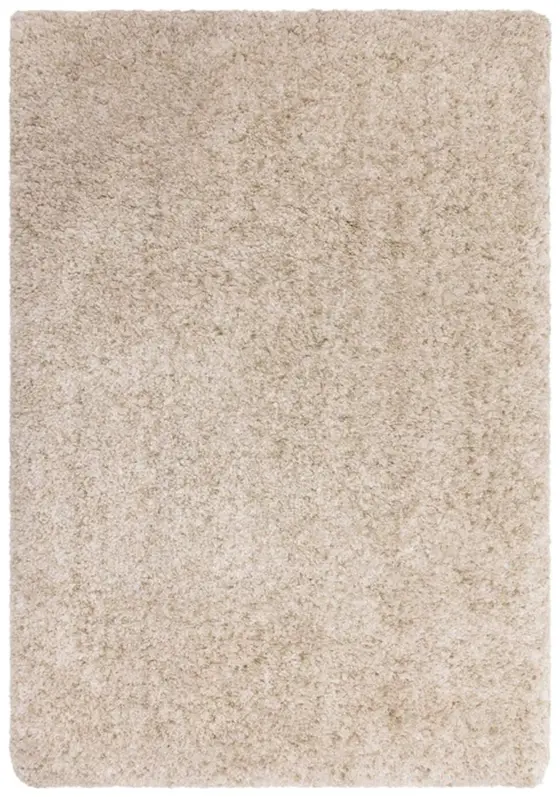
 Atlas Shaggy Rug in Ivory Cream
from £59.98
Related guides
- Large living room rug ideas for spacious UK homes
- Utility room rug ideas: practical and washable solutions
- Teen bedroom rug ideas that match their style
- Studio flat rug ideas for open-plan living and zoning
- What size rug do I need? A room-by-room guide
- All rug guides
Questions about a specific rug? Every product page lists the maker's size, material, pile height and care details. Delivery is free and tracked to England, Wales and mainland Scotland, and you have 14 days to change your mind. See delivery and returns.